



.png)
A Year in Review—2025
 We wish you a happy and healthy new year in 2026! Despite the current realities, we have reason to embrace some optimism about the future—solutions are within our reach and community-based actions put us on a path to meaningful health and environmental protection. Simultaneously, we recognize the need to respond to the serious magnitude of the crises that too many people are facing.
We look forward to working with you in the new year to meet the severe environmental and public health challenges with truly organic solutions!
While the threats of health, biodiversity, and climate crises grow exponentially, the solutions we have advocated for decades are now within reach. We know how to produce food and manage land without petrochemical pesticides and fertilizers, as organic food is widely available. Beautiful parks, playing fields, and schoolyards do not require toxic chemical use. At the same time, the regulatory system underperforms, as existential health and environmental problems escalate. And, we know that individual steps that we take to stay healthy, as important as they are, cannot protect us and the natural world from involuntary petrochemical exposure through ongoing contamination of land, air, and water. The science is telling us that we can no longer tinker with chemical reduction strategies that fall short of protecting our health, biodiversity, and climate.
We are redoubling our efforts against what may seem to be insurmountable challenges, given chemical industry and agribusiness power and a presidential administration committed to deregulating and dismantling environmental programs intended to protect health and the environment. With your help, we advocate with a strong voice based on our daily tracking of scientific studies and our policy analysis. Our collaboration with people and communities puts organic land management practices in place, starting with a soil analysis, recommended practices and materials, and technical support. We are advancing practical and cost-effective practices, showing that toxic chemicals are not necessary for land and building management.
Our goal is clear: END the use of petrochemical pesticides and fertilizers, and utilize practices and products that are in sync with nature and compatible with organic standards.
Click here to support our work as we take it to the next level in 2026!
With a 45-year+ track record of successfully advancing systemic change, we know the solutions are within our grasp. We are honored to work collaboratively to make this happen . . . now and for future generations.
Here are some highlights of how our supporters and partners have helped us in 2025 to advance Beyond Pesticides' mission to end petrochemical and fertilizer use:


Read Our Entire Message Below

TAKING BOLD ACTION
A strategy to eliminate toxic pesticide use and adopt nonhazardous alternatives
Our history is an important guide for our current program in this period of perilous catastrophic environmental and health threats, while effective and cost-saving solutions are within reach. Today’s health, biodiversity, and climate crises, associated with a confluence of factors including the reliance on toxic pesticides and fertilizer use, call for Beyond Pesticides’ bold program. Our strategy questions underlying norms of toxic chemical dependency, enabling broader public understanding of pesticide hazards in air, water, land, and food, while leveraging the opportunity for foundational change in product choices and the management of land and buildings.
To think and act boldly is to advance a holistic solution that challenges the assumption that toxic chemicals are a tool that can be managed with mitigation measures and restrictions that make them acceptable. The science tells us, and history confirms, that pesticide restrictions have failed and that pesticide uses partially withdrawn from the market after long negotiations between the U.S. Environmental Protection Agency (EPA) and the chemical industry are replaced with new chemicals with known hazards and continuing uncertainties associated with the chemical mixtures to which we are exposed daily.
With the current challenges being endured by the people of our country and around the world, threats to
a sustainable future can be overshadowed by the crises that impede daily survival. At Beyond Pesticides, we recognize the immediate support needed in this regard, at the same time that we move ahead with the urgent work to ensure a sustainable future. We move forward, while affirming that we must collectively work to uphold scientific integrity, democratic institutions, academic independence, fair elections, social justice, equality, independent courts, and the rule of law.
Strategic Objectives
- Empower strategic local action with knowledge on: a. The current and looming threats to human health and ecosystems, and the dire consequences of inaction or measures that fall far short of what is necessary; and b. The path forward to eliminate the use of petrochemical-based pesticides and fertilizers, including the constellation of toxic materials used in food production and the management of landscapes, gardens, parks, playing fields, and schoolyards.
- Support, through hands-on practices and policies, the adoption of agroecological principles embodied in organic standards with the goal of supporting organisms in nature that are essential to a balanced natural environment, ecosystem services, and are essential to sustaining life.
- Tracking the science and regulation to support toxic pesticide elimination with our Daily News and extensive databases (Gateway on Pesticide Hazards and Safe Pest Management, the Pesticide-Induced Diseases Database, and ManageSafe) and in thwarting threats to health, biodiversity, and climate.
- Policy advocacy with our unique and targeted Action of the Week, providing easy personalization and submission of comments to policy makers at the local, state, and national level, supported with technical analysis on the hazards associated with current or proposed practices and policies, and evidence of cost-effective nonhazardous alternatives.
- Technical support for transitioning communities to organic land management to protect ecosystems and the organisms that inhabit them, including bees, birds, bats, and other organisms essential to a livable future, recognizing the importance of nurturing complex biological communities that support life.
- Networking for change through collaboration with local, state, and national groups, growing a powerful force for systemic and foundational change that recognizes both the harm to health and the ecosystem, as well as the availability of cost-effective, productive, and profitable alternatives not reliant on petrochemical pesticides and fertilizers.
- Protecting those with elevated risk factors who are disproportionately affected, encompassing a range of factors that include high-risk occupations (from landscapers, farmworkers, to farmers), living near toxic sites, vulnerabilities associated with age (children and older population), and preexisting medical conditions (increasing vulnerability to exposure).
- Holding corporations accountable for misleading and harmful practices, filing consumer protection cases that allege that targeted corporations engage in fraudulent and misleading practices with marketing and labeling claims that products are protective of the environment, “eco-sensitive,” and safe, when they contain hazardous chemicals.
- Protecting local authority and legal recourse by ensuring local and state governments’ authority to restrict pesticides, people’s ability to sue for failure to warn, and the integrity of organic standards under federal law.
.png)
CAMPAIGNS AND FUNDRAISERS
We thank all our donors and supporters for your yearly gift contributions!
Without your engagement and incredible generosity, it would not be possible to lead the transition to a world free of toxic pesticides. Your critical financial support enables people to: (i) raise their voices through our Action of the Week and send messages with our suggested language to key decision makers at the local, state, and federal level, (ii) uphold and enhance, with our analysis, the integrity of organic food production as integral to protecting nature and health, (iii) become advocates with our Parks for a Sustainable Future program to transition parks, playing fields, and open-space to organic land management, and (iv) work with our staff to put protective policies in place in towns/cities/counties and school districts. Our program envisions and implements at the community and farm level an investment in organic land management as an essential need for the common good. We can do this together, knowing that individuals and small groups have tremendous power to effect change, starting close to home.
Members and Donors. It's a fact. Your support makes our work possible. We provide up-to-date information about the health and environmental hazards of pesticides, pesticide regulation and policy, holistic non-toxic management systems, and cutting-edge science—free of charge to the public. This program would not be possible without the generosity of people like you. Your donation provides us with the resources to continue our essential work to protect people and the planet!
Thank you for considering support for Beyond Pesticides this year! Every contribution, regardless of size, helps to keep Beyond Pesticides’ voice on your behalf in the forefront. Please mail your tax-deductible donation to Beyond Pesticides (701 E St SE, Ste 200, Washington, DC, 20003) or donate securely at bp-dc.org/give!
Please make a year-end gift today!
Marketing Campaigns. Throughout the year, Beyond Pesticides collaborated with a coalition of organizations, organized by Friends of the Earth, on a series of market-based campaigns and outreach in the pursuit of a transition away from the use of petrochemical pesticides, within the supply chains, in production, and on the shelves!
 Building on a campaign with direct engagement and feedback to Green America, Beyond Pesticides released an Action in tandem with signatures from coalition partners, enabling the public to urge beer producers to seek out organic sources for their ingredients. Not only do residues pose a risk to beer drinkers, but growing these crops nonorganically threatens farmworkers, waterways, wildlife, and pollinators. As a result, over 5,500 messages have been sent to the CEOs of six corporations—Anheuser-Busch, Molson Coors, Constellation Brands, Heineken USA, Pabst Brewing Company, and Diageo. The product of a year-long collaboration, a key advancement was the introduction and inclusion of holistic, transformational copy that, instead of relying on a reductionist approach, called for time-bound, measurable commitments to ban or eliminate pesticides from the supply chain, while highlighting organic practices and products as the gold standard solution.
TRACKING THE SCIENCE
Informing advocacy with the scientific imperative
Our daily objective at Beyond Pesticides is to inform action to empower advocacy with science, policy solutions, and practical implementation of cost-effective alternatives. Conventional, chemical-intensive land management practices are not sustainable. Petrochemical pesticide and fertilizer dependency contributes significantly to escalating crises in health, biodiversity, and climate. We talk about improvement in public health and environmental protection as requiring science, policy, and action. We need all three of these pillars, with the central pillar—science—informing action and changes in practices and policy. In this context, we publish the Daily News and then catalogue the findings in our Pesticide-Induced Diseases Database on health and biodiversity effects, and What the Science Shows on Biodiversity—pollinators and other organisms—which provides the science that informs action. In each Daily News, we critique the study under review and then link to our databases and previous critiques to establish a pattern of harm and the preponderance of evidence that supports the urgent need for action.
We start with the science.
 With science made accessible to nonscientists, we empower people to advocate effectively with decision makers, elected officials, and all those responsible for directing or managing the choice of practices and products. The scientific literature covered in our Daily News and our databases on pesticide-induced diseases—including endocrine disruptors causing cancer and a host of diseases— identify the health threats associated with the daily pesticide assault through air, land, food, and water.
Throughout the year, we provided critical information via the information services program, including:
Daily News—On a daily basis, five days a week, we have produced analytical articles that translate complex scientific findings, judicial findings, regulatory decisions, and legislative action. Published on our website, and focusing on the compelling scientific justification for eliminating pesticides, our program staff integrates their analysis into the support that is provided to communities, decision-makers in communities, states, and the U.S. Congress.
Top Daily News of 2025
- Biodiversity Threatened by Pesticide Drift, Study Finds; Organic Agriculture Cited as a Holistic Solution, January 3, 2025
- Waterway Contamination Findings with Neonicotinoids Insecticide a Threat to Aquatic Ecosystems and Biodiversity, January 24, 2025
- Study Demonstrates Health Benefits of Organic Diet Over That Consumed with Toxic Pesticides, February 4, 2025
- Revealing “Dirty Weed”: Pesticides in Cannabis Raises Health Concerns, as Advocates Advance Organic Solution, February 6, 2025
- Study Finds Increased Offspring Mortality in Pesticide-Laden Bird’s Nests, February 11, 2025
- Glyphosate Weed Killer Contaminates Stem Cells, Is Linked to Blood Cancers and DNA Damage, Study Finds, February 27, 2025
- Kenya Court Rules Against GMO Corn Imports, Major Win for Food Sovereignty, March 19, 2025
- Mexico Rejects U.S. Forcing Genetically Engineered Corn on Country under Trade Agreement, March 21, 2025
- Landmark Agricultural Pesticide Use Notification Takes Form, as Efforts to Eliminate Pesticides Gain Traction, April 4, 2025
- Pesticides Found in Marine Atmosphere Over Deep Atlantic Ocean, Documented for the First Time, April 16, 2025
- Study Finds Synergistic Convergence of Global Warming, Pesticide Toxicity, and Antibiotic Resistance, May 1, 2025
- Golf Courses Linked to Parkinson’s Disease and Pesticide Use, May 22, 2025
- Hypertension and High Blood Pressure Linked to Pesticide Metabolites in Elderly, According to Research, June 4, 2025
- National Pollinator Week 2025 Kicks Off with a Week of Activities and Actions—June 16-22, 2025! June 16, 2025
- Mass Kill of Monarch Butterflies in California Linked to Pesticide Residues in Their Bodies, July 16, 2025
- Congress Asked To Stop Provision in Approps Bill Blocking Pesticide Lawsuits on Farmer and Consumer Harm, July 21, 2025
- Senate Approps Cmte Considers House Bill Provision that Strips People of Right to Sue for Pesticide Harm, July 24, 2025
- Sublethal Effects of Weed Killer Glyphosate Associated with Colony Decline, According to Study, July 31, 2025
- EPA To Allow Dicamba Herbicide Used in Genetically Engineered Crops, Prone to Drift and Weed Resistance, August 4, 2025
- Study Cites Ban of Bee-Killing Pesticides in EU, Inaction in U.S. and Canada, September 4, 2025
- EPA Webinar Today on New Self-Directed Pesticide Restrictions, Criticized as Lacking Accountability, September 16, 2025
- Study Reports Higher Cognitive Scores with an Organic Diet, October 3, 2025
- Toxic Chemical Exposure During Military Service Recognized as Threatening Veterans’ Health, November 11, 2025
- Report Links Prostate Cancer, Crashing Sperm Count to Pesticides; Medical Author To Speak at Dec. 4 Webinar, November 25, 2025
- Trump Administration to U.S. Supreme Court: Pesticide Companies Cannot Be Sued for Failing to Disclose Hazards, December 11, 2025
- Scientific Deception by Monsanto/Bayer on Display with Retraction of Landmark Glyphosate Safety Study, December 12, 2025
- Plus, Top Daily News Posts Revisited in 2025 from Previous Years!
- Cosmetic Lawn Pesticide Use Outlawed In Takoma Park, MD, First Local Ban Of Its Type in U.S., July 25, 2013
- Community Passes Resolution Banning Neonicotinoids, March 5, 2014
- Farmers and Environmental Groups to Challenge EPA over Herbicide Approval, October 23, 2014
- Glyphosate Classified Carcinogenic by International Cancer Agency, Group Calls on U.S. to End Herbicide’s Use and Advance Alternatives, March 20, 2015
- Glyphosate Causes Changes to DNA Function Resulting in Chronic Disease, According to Study, July 18, 2016
- Over Two Million Bees Killed After Aerial Mosquito Spraying in South Carolina, September 1, 2016
- FDA Bans Antibacterial Pesticide Triclosan in Soaps, While EPA Allows Its Use in Common Household Products and Toys, September 6, 2016
- Lawsuit Challenges TruGreen Chemical Lawn Care Company for Deceptive Safety Claims; Pesticide Applications Stopped by Some States During COVID-19 Crisis as Nonessential, March 30, 2020
- Evian Bottled Water, Touted for Its Purity, Tainted With Toxic Fungicide Pervasive in the Environment, July 15, 2020
- Roundup Shown to Kill Bees—But Not How You Might Expect, April 20, 2021
- Glyphosate Kills Microorganisms Beneficial to Plants, Animals, and Humans, October 28, 2021
- Farmed Salmon Just as Toxic to Human Health as Junk Food, June 16, 2022
- Bayer/Monsanto in Roundup/Glyphosate Case Stung with Largest Multi-Billion Dollar Jury Award, Asks States to Stop Litigation, February 23, 2024
- Research Links Parkinson's and Lewy Body Disease with Chemical Effects on Brain and Gut, April 19, 2024
- On Earth Day, Especially, Take Action to Ensure a Sustainable Future, April 22, 2024
- Pesticide Contaminated Cannabis in California Reveals Testing and Regulatory Failures, July 9, 2024
- EPA's Momentous Decision to Ban the Weed Killer Dacthal/DCPA: An Anomaly or a Precedent? August 8, 2024
 Pesticide-Induced Diseases Database (PIDD). The scientific findings documented in Daily News are captured in our PIDD database. Over the year, we continued to update PIDD, which includes 2,830 studies, up from 1,815 last year, with studies addressing pesticide exposure and cancer, endocrine disruption, neurotoxicity, and sexual and reproductive dysfunction logging the most entries.
 Gateway on Pesticide Hazards and Safe Pest Management.
The Gateway lists the health and environmental effects of over 400 registered pesticide active ingredients and is searchable by chemical name, product name, or health and environmental effects. This database provides valuable information about pesticides that anyone can access and is intended to help inform local community discussion on the hazards of pesticides used, while communities can access our ManageSafe database on alternative practices and products compatible with organic standards.
What the Science shows on Biodiversity. Scientific literature highlights the deadly effects of pesticides up and down the food web, identifying crucial threats to air, land, and the environment. The decline of bees and pollinators sends a clear message that systemic change is urgently needed. We track individual chemicals as the poster children for the deficiency in current regulatory analyses of chemicals and wildlife protection, and we have increased the cited research on this page to include over 525 studies that identify adverse effects to bees, pollinators, and other organisms from pesticides.
Additional Resources. The staff continue to expand and update resources on the website, including a complete overhaul of the Pollinator Week page, with daily resources, actions, and featured art from the public.

Eating with a Conscience. Designed to link purchasing decisions on food to their production effects on workers and the environment, the database includes information on all of the pesticides that have registered tolerance (legal residue) allowances by specific crop for more than 90 commodities.
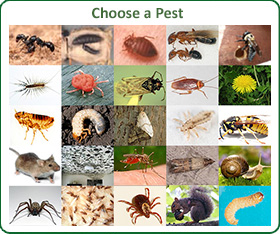
ManageSafe™. Beyond Pesticides offers hands-on information through ManageSafe™. Our database of practical solutions to pest issues is a central clearinghouse of information on eliminating hazardous pesticides in land and building management.
 Pesticide Free Zone Signs and Doorhangers
This year, our neighbor-to-neighbor program distributed over 187 Pesticide-Free Zone signs (ladybug, bee, and organic landscape) in 25 states. 30 packs of mosquito and lawn doorhangers were ordered, with approximately 24 people requesting the “25 free” offer for the packs across 16 states. This translates to approximately 1,350 doors reached.
ORGANIC AS A SOCIAL GOOD
Management practices eliminate petrochemicals that adversely affect health and the environment
Our strategy distinguishes Beyond Pesticides from campaigns against individual pesticides or pesticide
families, which historically is an approach that leaves us confronting new chemical replacements and more complex problems. We no longer use the word “reduce” and, instead, define our efforts to “eliminate” toxic pesticide and fertilizer use. We are careful to shine a spotlight on flawed and outdated statutes and regulations that do not integrate into their standards the viability of organic practices as a social good to meet the urgency of the moment.
KEEPING ORGANIC STRONG 
We are highly engaged in constantly protecting and building the integrity of organic standards through our Keeping Organic Strong campaign and web-page and our critique of every issue before the National Organic Standards Board (NOSB). We told the NOSB, “There is no element more central to the organic system than soil, and what we allow to be put into the soil. The Organic Foods Production Act includes the requirement to “foster soil fertility, primarily through the management of the organic content of the soil. . .” which is fundamental to an organic systems plan. In this context, the board must concern itself with the content of the compost or the substances that are allowed in the compost.
To grow the organic market, we urge the NOSB to maintain the rigor of review, while supporting the expansion of an agricultural sector that seeks to eliminate threats to health, biodiversity, and climate by putting an end to a reliance on petrochemical inputs or ingredients in the chain of production. The NOSB can and must do this under its statutory responsibility to manage the National List.
.png)
TRANSITIONING TO ORGANIC IN COMMUNITIES
Change from the ground up
With a hands-on program called Parks for a Sustainable Future, we work to show the cost-effective viability of organic land management practices in communities across the U.S. that serve as models for the nation. While we help to elevate the demand for organic food and advocate to ensure the integrity of the underlying standards, we are effecting a wave of actions nationwide to show communities, through demonstration projects, the benefits of organic land management in parks and on playing fields and open-space. Our goal is to establish successful community-based programs as a springboard for the wide adoption of ecologically sound land management practices. We bring horticultural skills to communities to put in place organic management. We provide technical support to communities and continue a robust program of empowering local leadership with science and technical information for effective change.
Our program staff and consultant horticulturalist meet with community leaders, advocates, and park managers to provide training on management practices, the value of soil microbial life in cycling nutrients, and organic compatible materials, while addressing the benefits to public and worker health, and the protection of waterways and biodiversity. We educate the community on the value of this program in addressing the health, biodiversity, and climate crises by eliminating the use of petrochemical pesticides and fertilizers.
Public Education
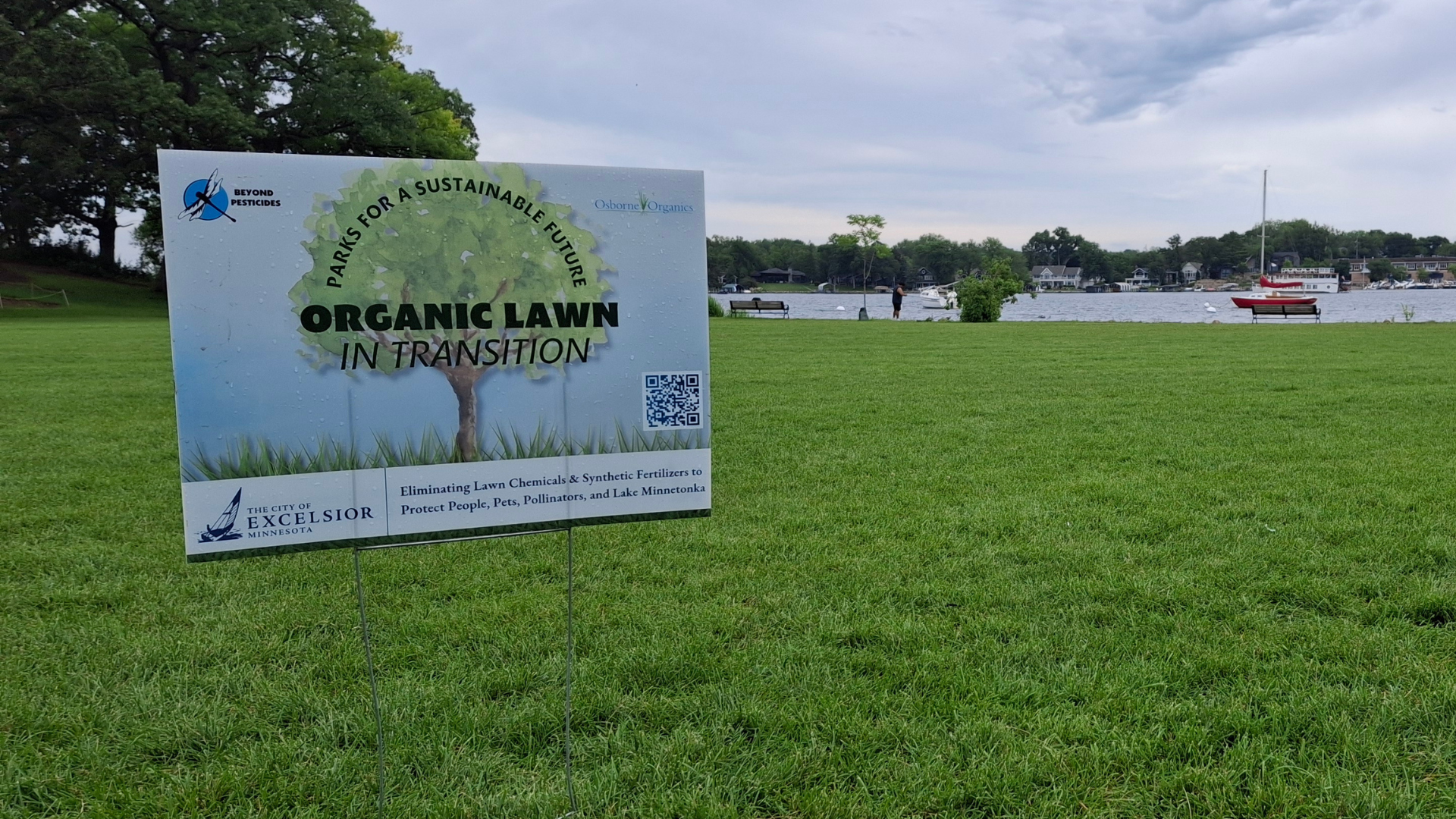
We issued a series of press releases to educate on the programs that were launched in Kansas City, Missouri (KCMO), and Excelsior, Minnesota. A National Public Radio piece out of KCMO, “These Midwest cities are cutting pesticides from public parks with the help of a national nonprofit,” highlighted the two cities and the role of a local advocate in getting the program off the ground. The parks and natural resources manager in Excelsior said about the program: “Working with Beyond Pesticides to help improve the health of our park system reminds me of the popular quote: ‘Treat the Earth as if your life depends on it—because it does.’ Organic lawn care is a new adventure for the City of Excelsior, and we are very fortunate for the opportunity to make this transition with such a dedicated and knowledgeable team of professionals, city residents, and volunteers.” Image credit: Kevin Quinn/Program signage at the Commons/City of Excelsior.
Training
In Golden and Lakewood, Colorado, we conducted training of park staff with an overview of organic practices, ecosystem services, methods for working with nature and supporting biological life in the soil, increased resiliency, and reduced water use. We reviewed soil tests from the sites for soil chemistry, texture, and biology, which enabled us to design an organic fertility program that addresses the conditions of the site.
We continued to support programs started previously with resources from Natural Grocers in: Colorado Springs (CO), Golden (CO), Lakewood (CO), Grinnell (IA), Kansas City (MO), Summerlin (NV), Springfield (OR), Austin (TX), and Denton (TX). Additional support continued with: The Bluffs, Newport Beach (CA), Brookline (MA), Excelsior (MN), and New York City (Brooklyn, Bronx, Manhattan, Queens, Staten Island).
 Outreach
The 2025 Growing Sustainable Communities conference in Dubuque, Iowa provided us with an opportunity to conduct a workshop on our Parks for a Sustainable Future program, which underwrites the cost of developing an organic transition plan for parks and playing fields based on soil tests and an evaluation. We brought the City of Dubuque and the University of Iowa into the program. Staff member Rika Gopinath featured with Good Neighbor Iowa, left.
Policy
We work with communities to educate on the value of institutionalizing the organic management program into policy with model policy language. At the same time, we support advocates when policies are attacked with weakening provisions that undermine the community’s commitment to organically managed parks and playing fields. We engage people on state and federal policy issues to advance protection of public health and the environment.

RAISING VOICES FOR CHANGE
Creating a record that incentivizes action close to home
During these times, Beyond Pesticides urges sending a message even to those who refuse to listen. As we strive to adopt the changes essential for a livable future, we believe that we must create a record based on science, even when the science and the facts are dismissed by those in power. To this end, the failure of action to address the existential health, biodiversity, and climate crises by those in Congress and the administration empowers lower levels of government and corporations to step into the void left by those whose actions or inaction threaten life.
Sign up for our Weekly News Update and Action of the Week listserv here!
NETWORKING FOR CHANGE
The 42nd National Forum (2025)—The Pesticide Threat to Environmental Health: Advancing Holistic Solutions Aligned with Nature


Featured speakers, left to right: [Session 1] Danilo Russo, PhD, Jo Ann Baumgartner, Sam Earnshaw, and Tony Able; [Session 2] Rossella Cannarella, M.D., PhD, Carolina Panis, PhD, Jabeen Taiba, PhD, and Emile Habimana, M.S.—Jay Feldman, executive director, Beyond Pesticides, moderating, right.
A Call to the Forum
We are all affected by how land is managed, food is grown, and nature is protected. Different experiences and perspectives may bring us to care about health and the environment and the devastating adverse effects of pesticides and toxic substances. However, ensuring a livable future requires us to cultivate a collective concern about daily decisions on the management of our personal and community spaces, the practices used to grow the food we buy, and the care that we as a society give to complex and fragile interrelationships that sustain the natural world on which we depend.
This 42nd National Forum, The Pesticide Threat to Environmental Health: Advancing Holistic Solutions Aligned with Nature, challenges us—as concerned families, residents of our community, purchasers of products, advocates for policy, decision makers, and workers—to think holistically about ways we can join together to solve the existential threats to health, biodiversity, and climate for which petrochemical pesticides and fertilizers are major contributors.
We must literally build our strategies from the ground up. Whether we live in a rural area, a city, or suburb, we are all intricately linked by the environment that we share. And for this reason, the Forum is intended to focus on how we can and must, in a practical way, embrace the natural systems that serve as the foundation for life.
 About Session 1: October 29, 2025, 1:00 - 3:30 PM Eastern (ET)
We started the Forum with case studies on what is now being done to integrate nature into the food production system in ways that are beneficial to organisms in the environment and the health and economy of the areas where they live. The speakers addressed their research and practical experience in identifying practices that embrace nature with a collaborative spirit and teach us about the value of bats, birds, and beavers in productive agricultural and land management systems. The costs of conventional agriculture, reliant on petrochemical pesticides and fertilizers, have proven to be unsustainable, with incalculable trillions of dollars in present harm and future catastrophic losses, or externalities, associated with current toxic products and practices that are widely used, but unnecessary to our productivity and quality of life. The focus of this Forum calls for a reorientation, replacing toxic practices with the nurturing of natural systems that sustain life.
 About Session 2: December 4, 2025, 1:00 - 3:30 PM Eastern (ET)
Cancer and other diseases associated with pesticide use and exposure represent a problem of crisis proportions. Breast cancer has been and is estimated to be the largest cause of cancer deaths in 2025, followed by prostate cancer. The vast majority of these cases are understood to be hormone-driven, not genetic, meaning that endocrine disruptors appear to be driving the largest cause of cancer and many other prevalent diseases. We address sewage sludge (biosolids) contamination as a vivid display of the daily reality of unregulated chemical mixtures directly through toxic products and practices, and cycled as contaminants through our food, water, soil, and air. The Forum empowers voices for the transition to practices and products that do not accept toxic chemicals as necessary when alternative systems are available to us. The science supports the urgent call for systemic change at this moment of health, biodiversity, and climate crises, with the promise of productive and profitable alternatives. This call for foundational change is motivated by our collective understanding that the critically needed response to the crises must not be diverted by anything less than a holistic strategy—recognizing the science on adverse effects of extremely small chemical doses to all organisms, including humans, and the synergistic effects of multiple chemical exposure.
The Forum session recordings can be viewed on our website! Keep an eye out for our 2026 conference!
Top Actions of the Week for 2025:
-
- Take Action Against Plastics, Data Shows They Intensify Pesticide Toxicity [February 28, 2025]
- Tell your governor and state legislators to pass a “beyond plastics” bill to reduce harm from microplastics and their interaction with pesticides and other toxic chemicals; AND
- Tell Secretary of Health and Human Services Robert F. Kennedy, Jr. to use the Federal Food and Drug Administration to get plastics out of food.
- Tell EPA To Ban Antibiotics in Agriculture, Lawns, and Landscapes [July 25, 2025]
- Tell EPA To Ban Antibiotics in Agriculture, Lawns, and Landscapes II [October 18, 2025]
- Tell FDA to Stop Food Industry from Declaring Ingredients Safe without Oversight [March 21, 2025]
- Tell Congress To Ensure Integrity in Federal Agencies [January 31, 2025]
- EPA’s Ongoing Failures Go Beyond Pollinators [June 20, 2025]
- Tell State Legislators To Focus on Ecosystem Protection, Not Just Individual Pesticides [February 22, 2025]
- Organic Beer for Beer Lovers and the Earth [November 7, 2025]
- Ubiquitous Residues of Glyphosate Show the Need for Systemic Assessment and Change [September 12, 2025]
- Tell Congress To Stand Up for Health and the Environment [August 22, 2025]
- Pesticides in Combination with Other Chemicals Magnify Effects [September 5, 2025]
- Beyond Pink Ribbons—It’s Time To Get Serious About Eliminating Carcinogens [July 12, 2025]
- Protect All Waters of the U.S. [May 22, 2025]
- Advance State Tax Policies for Organic Transition, As Federal Government Reduces Support [February 15, 2025]
- PFAS Is the New DDT [December 13, 2025]
- Take Action Against Plastics, Data Shows They Intensify Pesticide Toxicity [February 28, 2025]
PRESENTATIONS THAT INFORM ACTION
We speak to local communities and organizations across the country; for example:

Soil and Climate Alliance Webinar. Beyond Pesticides was invited to join a group webinar hosted by the Soil and Climate Alliance community to discuss federal updates on the Farm Bill, the future of agricultural support programs, and the importance of pesticide regulation and organic as a solution. The audience of over 30 participants was largely advocates, businesses, and farmers/ranchers invested in regenerative agriculture.
Alliance of Nurses for Healthy Environments Webinar. Beyond Pesticides was invited to present to the Policy-Advocacy Committee of Alliance of Nurses for Healthy Environments on the corporate interference in scientific review and regulatory processes for pesticides, the legacy of preemption, and updates on failure-to-warn, and opportunities to transition to an organic system. Over 20 nurse/medical practitioner advocates from across the U.S. were in attendance, and the recording of the 45-minute presentation is published online.
 Biodiversity for a Livable Climate: Wildlife & Climate Webinar. Beyond Pesticides led a two-hour webinar session on the connection between pesticides, climate change, and impacts on wildlife. In focusing on the science and solutions, the session ”Wildlife and Climate: Science and Solutions” included how the petrochemical pesticide life cycle contributes to climate change; how climate change creates conditions for increased pesticide use and also exacerbates pesticide toxicity; how glyphosate as a poster child for a broken system; the impacts on wildlife (soil microbes, pollinators, terrestrial mammals, and aquatic organisms) from pesticide exposure; and the organic solution for all agricultural and land management practices.
Pesticides & the Chesapeake Bay Watershed Conference, Maryland Pesticide Education Network. Beyond Pesticides presented at the conference with a talk entitled “Policies and Practices for a Sustainable Future." The talk provided the context for deregulation and dismantling of EPA under the Trump administration, citing (i) Weakening Restrictions. Weed killer dicamba - appointed a former industry lobbyist to oversee pesticide rules, indicating a push to reapprove the herbicide despite legal setbacks. (ii) PFAS. Registration of four new PFAS active ingredients this year; Moves to weaken PFAS rules, changes in chemical risk evaluations. (iii) Fails to fully implement full testing all pesticides for endocrine disruption, as required in the Food Quality Protection Act. (iv) Recission of recordkeeping on restricted use pesticides by certified applicators. (v) Ended National Nature Assessment, reviewed the state of the nation’s lands, water, and wildlife. (vi) Made more difficult submission of public comments on proposed rulemaking at regs.gov.
FELLOWSHIPS
Beyond Pesticides is committed to bringing youth into the movement to transition society to organic land management in advancing our goal to eliminate the use of petrochemical pesticides and fertilizers. The goal of the fellowship is twofold: (i) immerse students in the real challenges that people and the environment face through daily contact with our network and scientific information that informs the health and environmental problems associated with petrochemical pesticides and fertilizers and the organic solution, and (ii) develop and implement a research project that offers the fellow/researcher an opportunity to explore an area of interest that intersects with Beyond Pesticides’ mission and furthers public understanding of both challenges and solutions.
 Beyond Pesticides hosted one fellow this year, a rising sophomore from Duke University, Aditi Avinash, whose contributions to the organization included authoring Daily News posts, engaging with info requests, developing a webpage on pesticide exposure and reproductive health effects for women with organic as the solution, and partnering with each staff member for a week on science, policy, and grassroots advocacy. After her final presentation, Aditi has continued to receive guidance as she seeks to take action at her institution this year: to work with university leadership to identify what pesticides are used on Duke’s campus, in what quantities, and where, with the goal of better protecting the health of students, staff, and their shared environment.
IMPACT LITIGATION
.png)
Holding Corporations Accountable for Fraud and Failure to Warn
With deregulation and widespread reductions in government programs, the role of the courts has become even more critical to incentivizing corporate responsibility and accountability. At the same time, the role of states and local governments has become increasingly important in setting standards protective of health and the environment.
Building a Failure-to-Warn Coalition
In response to the chemical industry seeking to shield itself under state and federal law from liability associated with its failure to warn those harmed by its products about their potential danger, we launched the Failure-to-Warn Resource Hub—a one-stop shop for advocates to learn about the history of pesticide industry interference in regulatory and judicial review.
A bill tracker maintains updates on the progression of legislation ahead of key hearings and votes, as well as unique Action Alerts for all 12 states where bills have appeared in 2025; these states include Missouri, Idaho, Iowa, North Dakota, Florida, Tennessee, Georgia, Wyoming, Montana, Mississippi, Oklahoma, and North Carolina. The team coordinates with partners to identify additional states to ensure that there are targeted resources for those communities.
We produced a factsheet and information campaign on the industry’s effort to use the appropriation bill in Congress to circumvent its responsibility to disclose harm on product labels. The factsheet, “Protect the Right of Farmers, Consumers, and Workers to Hold Pesticide Companies Accountable for Their Harmful Products,” calls on Congress to reject a provision that establishes weak labeling language on pesticides without warning of cancer and other chronic effects.
Preemption of State and Local Authority
We continue to educate and track chemical industry efforts to advance legislation that preempts state and local authority to restrict pesticides. Their campaign is focused on inserting into the Farm Bill legislation that will universally preclude states from allowing their local jurisdictions to restrict pesticides more stringently than the state, which has been done widely in Maine and in the most populous county in Maryland.
Challenging Sewage Sludge as Eco-Sensitive

The release of scientific studies on contaminants in sewage sludge (biosolids) used as fertilizers coincided with two lawsuits filed by Beyond Pesticides against ScottsMiracle-Gro and GreenTechnologies, LLC, in which the organization alleged that each defendant engaged in false and deceptive marketing and sale of fertilizer products that were described as environmentally friendly, despite containing per- and polyfluoroalkyl substances (“PFAS”). PFAS have been linked to cancer and other adverse effects. Biosolids are widely used in agricultural production and nonagricultural land management, including parks and playing fields, but are prohibited from use in certified organic agriculture under the Organic Foods Production Act. The Scotts Miracle-Gro Product, EcoScraps, was advertised as having a mission “to make sustainable living easy.” The Green-technologies, LLC product, GreenEdge, is advertised as “eco-friendly products for a healthier planet,” and a “sustainable fertilizer that enhances environmental quality.” We alleged in the lawsuits that reasonable consumers encountering representations emphasizing that these products are “eco-friendly” and “sustainable” do not expect the products to contain environmentally damaging, unsustainable chemicals. The complaint cites test results showing PFAS residues in the companies’ products and numerous scientific studies on the adverse effects of PFAS to public health, wildlife, and pollinators.
Additional actions taken include:
 Outreach to Congress. As an extension of failure-to-warn advocacy, there was an expansion of engagement with federal offices between July and late September 2025 to educate staffers on federal organic and pesticide laws. There were meetings where local and state advocates joined, including Northwest Center for Alternatives to Pesticides and Californians for Pesticide Reform. In total, significant email conversations and/or virtual meetings were held with 17 offices and House and Senate staffers. There will be continuous follow-up in the aftermath of the government shutdown to address potential marker bills for organic and additional broader reforms.
My Health Alliance Congressional Reception on Capitol Hill. Beyond Pesticides was invited to table and speak to Congressional staffers and other potential partners at a My Health Alliance Congressional Reception in September 2025. While Beyond Pesticides did not participate directly in the fly-in earlier in the day, the opportunity to join the reception facilitated relationship cultivation with potential partners. As a follow-up to this event, staff met directly with the Small Business Administration's Office of Rural Affairs in mid-September 2025 to share our interest in supporting the growth and expansion of organic markets in the United States.
Regulatory Comments and Oversight
-
Pesticides: Petition Seeking Rulemaking to Modify Labeling Requirements for Pesticides
and Devices [EPA-HQ-OPP-2024-0562] (February 2025) -
Endangered and Threatened Species: Species Status with Section 4(d) Rule for Monarch
Butterfly and Designation of Critical Habitat [FWS-R3-ES-2024-0137] (March 2025) -
Paraquat: feedback on the preliminary scientific reports and on critical uses of paraquat [California Department of Pesticide Regulation] (March 2025)
-
Preliminary Regulatory Determinations: Contaminants on the Fifth Drinking Water
Contaminant Candidate List [EPA-HQ-OW-2024-0456] (March 2025) -
Pesticide Tolerance; Exemptions, Petitions, Revocations, etc.: Chlorpyrifos [EPA-HQ-OPP2024-0431] (March 2025)
-
Pesticide Registration Review: Atrazine [EPA-HQ-OPP-2013-0266] (April 2025)
-
Public Participation for New Active Ingredient Cyclobutrifluram [EPA-HQ-OPP-2022-0003] (May 2025)
-
Public Participation for Isocycloseram [EPA-HQ-OPP-2021-0641], in collaboration with Pesticide Action & Agroecology Network (PAN) and 19 organizational sign-ons (June 2025)
-
Public Participation for New Active Ingredient Diflufenican [EPA-HQ-OPP-2021-0435] (July 2025)
-
Groundwater Protection List [California Department of Pesticide Regulation 25-002] (July 2025)
-
National Drinking Water Advisory Council Meeting [FRL-12882-01-OW] (July 2025)
-
Public Participation for New Active Ingredient, Trifludimoxazin [EPA-HQ-OPP-2022-0649] (July 2025)
-
Draft Sewage Sludge Risk Assessment: Perfluorooctanoic Acid and Perfluorooctane
Sulfonic Acid [EPA-HQ-OW-2024-0504] (August 2025) -
Public Participation for Proposed New Use on Dicamba-tolerant cotton and Dicamba-tolerant soybean. [EPA-HQ-OPP-2024-0154] (September 2025)
-
Public Participation for New Active Ingredient Fluoxapiprolin [EPA-HQ-OPP-2022-0980] (September 2025)
-
Pesticide Tolerance; Exemptions, Petitions, Revocations, etc.: Acetamiprid, Cypermethrin,
and Triclopyr [EPA-HQ-OPP-2024-0217; EPA-HQ-OPP-2024-0220; EPA-HQ-OPP-2024-0331] (September 2025) -
Agency Information Collection Activities; Proposals, Submissions, and Approvals: Labeling
Requirements for Certain Minimum Risk Pesticides under Federal Insecticide, Fungicide, and
Rodenticide Act [EPA-HQ-OPP-2024-0536] (September 2025) -
Trichloroethylene; Regulation Under the Toxic Substances Control Act (TSCA); Compliance
Date Extension [EPA-HQ-OPPT-2020-0642] (October 2025) -
Procedures for Chemical Risk Evaluation Under the Toxic Substances Control Act (TSCA)
[EPA-HQ-OPPT-2025-0260] (November 2025) -
1,3-Dichloropropene Report for 2024 - Draft for Public Comment [California Department of Pesticide Regulation] (November 2025)
-
Public Participation for New Active Ingredient Epyrifenacil [EPA-HQ-OPP-2022-0354] (December 2025)
-
Fish and Wildlife Service (FWS) Draft Biological Opinions for Atrazine and Simazine [EPAHQ-OPP-2020-0514] (December 2025)
ART AS A VEHICLE FOR CHANGE

The Art of Life
We have generated increasing excitement with our art submission page, tapping into the talent in our network to provide artistic messages supporting community-based work across the country. Our Art Page displays all art submissions, from drawings and paintings to photographs and literature, for users to enjoy. Additionally, we incorporate art submissions as feature pieces in our weekly newsletters or on our social media.
The artistic creativity of people in the Beyond Pesticides network, as featured below in a sampling of the artwork in our “Share Your Art” program, reminds us of the beauty we are preserving and nurturing when embracing practices that cherish the natural world in which we live.
Throughout 2025, over 100 submissions were added to the Art Page. As of December 2025, the page hosts 270+ photos, seven works of writing, one music video, and 80+ paintings/drawings, totaling over 350 works of art.
Thank you to all those who are sharing their incredible talents with us. We invite people to share a photo or artwork of nature, as well as short stories, poems, and songs. In submitting artwork, permission is given to Beyond Pesticides to share media, but all ownership rights are retained by the artist. All appropriate art submissions will post to the Art Page weekly, and we look forward to celebrating all future creative works!

The challenges ahead require that we redouble our efforts. Beyond Pesticides’ collaboration with people and communities in every state is providing the energy and enthusiasm to embrace the changes necessary to stop toxic pesticide use and embrace organic practices and policies. We know it can be done if we join together to protect health and the environment with science, policy, and activism. The solutions are within our reach. We look forward to working with you in 2025—with the required sense of urgency—to ensure the protection of health and the environment.
Our program empowers people to take action and effectively advocate with critical information and support. There is an urgency now requiring us to act holistically—not with piecemeal strategies, if we are to effectively tackle the existential threats to health, biodiversity, and climate that intensified with petrochemical pesticides and fertilizers.
We wish you a healthy and happy holiday season! The health and environmental challenges that we face as families and communities across the nation and worldwide require us to stay engaged. The stark reality of the challenges ahead energizes us at Beyond Pesticides to strengthen our program—now, more than ever!
Best wishes for a healthy new year!
See the enclosed holiday message from Jay Feldman, executive director of Beyond Pesticides.


Tis the Season for Family and Friends To Think About Going Organic for Safety Reasons, Putting Christmas Trees in Focus
This holiday season, bring the gift of toxic-free organic products to your loved ones by considering some of the links below. For those who celebrate Christmas, there is a growing movement of Christmas tree farmers across the United States demonstrating that organically managed systems can also be applied when choosing a tree during this holiday season. For more information, see the Christmas Trees and Pesticides page and Daily News.
Do not forget to decorate your tree and home using eco-friendly materials and consider choosing organic/eco-friendly gifts for loved ones like gifts from Beyond Pesticides’ online shop!
.png)
Resources for Organic and Fair Trade Gifts
- Beyond Pesticides Online Store (t-shirts, bumper stickers, DVDs, books, and more!)
- Earth911
- Etsy
- Global Exchange
- Green Promise
- Taraluna