


15
Apr
Banned and Current Use Pesticides, Some from Outdoor Use, in Indoor Dust Raises Alarm, According to Study
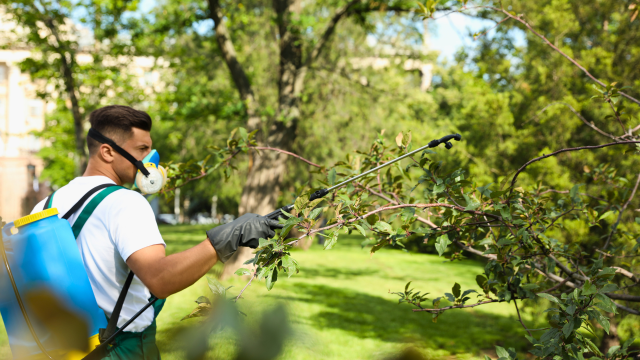
(Beyond Pesticides, April 15, 2026) Researchers in the Czech Republic tested indoor dust across 116 homes and found that 93 percent of homes across urban and rural areas contained residue of at least one current-use pesticide (CUP). The study also found in every household residues of hexachlorobenzene (HCB) and pentachlorobenzene (PeCB), the breakdown products or byproducts of certain banned organochlorine pesticides (OCP). These compounds, as well as DDT metabolites DDE and DDD, were detected in more than half of the homes tested. Results in this study and previous research confirm that pesticides used outdoors find their way indoors, resulting in an exposure pattern that is not calculated when pesticides are registered and allowed on the market. The findings are published in Indoor Environments.
These findings characterize the legacy of toxic pesticide exposure resulting from the proliferation of pesticides in the United States and around the world without a complete assessment of the chemicals’ residual activity and multigenerational adverse impacts on health. Based on the decades of peer-reviewed scientific literature on pesticide exposure and effects from across the globe, public health and environmental advocates warn that there is a continuation of this pattern of long-term effects associated with new pesticides linked to cancer, reproductive, neurological, and immunological effects—as exemplified by the recently registered PFAS “forever” pesticides with widespread adverse public health and environmental threats and disproportionate impacts to children, farmworkers, and people of color communities. (See Widespread PFAS Pesticide Contamination Harkens Back to DDT Poisoning.) This history of ongoing poisoning and contamination emboldens advocates to mobilize for an alternative approach that breaks the cycle of chemical-intensive dependency in pest management and transitions to organic practices—as defined by the Organic Foods Production Act (OFPA) and decades of principles from organic regenerative land management.
Methodology and Results
“To improve our understanding of the indoor presence of pesticides, we investigated pesticide concentrations in the context of building types, locations and characteristics of the building bacteriome,” the authors write. They continue: “Given the known seasonality in pesticide use and outdoor air concentrations of pesticides [], we additionally sampled a subset of homes monthly over one year to investigate the seasonal variations and trends in pesticide profiles.”
The indoor dust samples were assessed for 36 CUPs (pesticides that are currently in use), including:
- Eighteen herbicides (alachlor, acetochlor, atrazine, chlorsulfuron, chlortoluron, dimethachlor, diuron, fenoxaprop ethyl, fluroxypyr, isoproturon, metamitron, metazachlor, metolachlor, metribuzin, pendimethalin, pyrazon, simazine, and terbutylazine);
- Thirteen insecticides (azinphos-methyl, carbaryl, chlorpyrifos, diazinon, dimethoate, disulfoton, fenitrothion, fonofos, malathion, methyl parathion, pirimicarb, temefos, and terbufos); and
- Five fungicides (carbendazim, fenpropimorph, prochloraz, propiconazole, and tebuconazole).
The samples were also assessed for ten OCPs and breakdown products (metabolites), including DDT, DDE, DDD, alpha-HCH, beta-HCH, gamma-HCH, delta-HCH, epsilon-HCH, pentachlorobenzene (PeCB), and hexachlorobenzene (HCB). For quality assurance and control of the data, the researchers collected field blanks (contaminant-free samples treated with the same conditions as the experimental samples) and procedural blanks (assessing the potential contamination of pesticide analytes within the laboratory setting).
With respect to the intersection of bacterial and pesticide residue, the household data was quality-controlled to home in on 88 samples. They employed the “Spearman rank correlation matrix” through statistical analysis tools (see Section 2.3.2 on data analysis) to assess any relationships between these two categories of residues. Dust ingestion exposure estimates for pesticides with greater than 40 percent detection frequency in tested households are compared with typical and high exposure scenarios (based on EPA’s Exposure Factors Handbook for children between the ages of one and six years), with reference doses for chronic ingestion exposure (based on 2024 data from U.S. Environmental Protection Agency CompTox).
The researchers arrive at the following conclusions/results:
- The fungicides carbendazim (84.5 percent), propiconazole (49.1 percent), and tebuconazole (11.2 percent), and the herbicide atrazine (24.1 percent) were the most frequently detected residues in this study.
- Researchers found that houses older than four decades had significantly higher concentrations of DDD, DDE, and HCB.
- Carbendazim and propiconazole levels were significantly impacted by households with adjacent gardens, the former having higher levels in non-garden homes and the latter having higher levels in homes with gardens.
- DDE concentrations are higher in pet households, given that dogs and cats are likely to bring in more soil particles. More research is needed to ascertain other factors that could play into this finding, according to the researchers.
- Across four locations (“urban central,” “urban residential,” “suburban agricultural,” and “suburban forested”), atrazine, carbendazim, propiconazole, and tebuconazole were the only CUPs detected either in more than 50 percent of samples or greater than same detection level in at least one of the four locations.
- Researchers hope to continue this research to assess other routes of exposure, including diet, inhalation, and dermal, to more holistically assess potential harm.
- Reference doses were not available for multiple detected pesticides, and the potential for synergistic/additive effects from chemical mixtures is not assessed, which the researchers acknowledge, writing that their “exposure estimates presented here should be interpreted as a simplified screening level assessment rather than a comprehensive evaluation of cumulative pesticide exposure.”
Previous Coverage
This is not the first study Beyond Pesticides has reviewed that focuses on indoor dust exposure in agricultural and nonagricultural households/communities, in the U.S. and global contexts.
A study published in Environmental Science and Technology finds that there are 47 current-use pesticides detected in samples of indoor dust, drinking water, and urine from households in the state of Indiana. “In this study, we collected matched samples of indoor dust, drinking water, and urine from 81 households in Indiana, United States, and analyzed these samples for 82 CUPs [current use pesticides], including 48 insecticides, 25 herbicides, and 9 fungicides,” the authors write. They continue: “Of these, 47 CUPs were identified across samples of indoor dust, drinking water, and urine with median total CUP (∑CUP) concentrations of 18 300 ng/g, 101 ng/L, and 2.93 ng/mL, respectively.” The participants were recruited through the Person-to-Person (P2P) Health Interview study cohort at Indiana University, which was approved by the university’s Institutional Review Board. The dust, drinking water, and urine samples were all collected on the same day for each study participant, with three samples per participant, amounting to 243 total samples. Neonicotinoids and their “breakdown products” were the most abundant group of insecticides found in indoor dust, “contributing more than 70% to the total insecticide concentrations.” Additionally, “the most abundant herbicide detected in indoor dust was 2,4-dichorophenoxyacetic acid (2,4-D), which constituted more than 85% of the total herbicide concentrations.” Considering that 2,4-D has a short half-life of one and a half days, the authors believe that this “may indicate a recent application in the vicinity of the sampling area.” (See Daily News here.)
Meanwhile, a study published in Environment International concurs with previous reports that agricultural pesticide treatment can contaminate nearby residential areas, resulting in indoor chemical exposure via concentrations of insecticide active ingredients in house dust. Researchers collected carpet-dust samples from 598 California homes to measure the concentration of nine insecticides: carbaryl, chlorpyrifos, cypermethrin, diazinon, permethrin, azinphos-methyl, cyfluthrin, malathion, and phosmet. To compare the buffer zone between residential and agricultural areas, using the California Pesticide Use Reporting (CPUR) database, researchers estimate pesticide use within the buffer zone of agricultural and residential areas (buffer zone radii = 0.5 to 4 km). During the 30-, 60-, 180-, and 365-day periods, researchers evaluated the relationship between the density of pesticide use and the presence of pesticide dust concentration. (See Daily News here.)
Outside of the U.S. context, two recent studies add to earlier findings that raise exposure and health concerns of pesticide exposure through indoor dust. A large European study of house dust contaminants, published in Science of the Total Environment, finds more than 1,200 anthropogenic compounds, including numerous organophosphates, the phthalate DEHP, PCBs, pharmaceuticals, and personal care products. Additionally, a recent Argentine study, “Pesticide contamination in indoor home dust: A pilot study of non-occupational exposure in Argentina,” examines contaminant levels in household dust in villages and towns distributed throughout the Pampas region, where soybeans, corn, sunflowers, and livestock, especially cattle, are raised. The study participants were not agricultural workers, but teachers, government workers, librarians, retirees, college students, doctors, lawyers, artists, and businesspeople. The European study emphasizes previously reported determinations that the health effects of combined exposures have not been a priority for chemical companies or regulators. The European researchers attempted to determine acceptable daily intakes (ADI) for 202 of the compounds, but only 46 “had consensus-based ADI values.” In other words, of the 1,200 anthropogenic compounds detected, a measure of potential toxicity was available for only about 4 percent. (See Daily News here.)
A University of California, Los Angeles (UCLA) report, Building Capacity for Robust Pesticide Regulation: Part I – Cumulative Impacts, underscores some of the critical gaps in federal and state pesticide law and the opportunity for comprehensive reform to strengthen cumulative impact assessments for true and accurate exposure data for pesticide products. The main goal for this specific report is to develop a toolbox of scientific methodologies/approaches for California’s Department of Pesticide Regulation (DPR) and the local permitting process by county agricultural commissioners (CACs) to engage in more comprehensive and cumulative impact assessments under their purview. In the report, cumulative exposure refers to the various pathways (e.g., soil, air, water) and routes (e.g., ingestion, dermal, inhalation) through which pesticide exposure occurs. Cumulative risk is the combined risk from multiple exposures, with cumulative impact stacking on additional dimensions (or “stressors,” as the report refers to them), including socio-economic status or heat stress, among others. There is also a distinction in regulatory approaches for different types of pesticide mixtures (product mixtures, field mixtures, and coincidental mixtures), a set of criteria that is nonexistent in federal pesticide law. (See Daily News here.) Advocates continue to call for more robust state and local pesticide laws.
Call to Action
The most efficient and effective way to eliminate the manufacturing, distribution, sales, use, and disposal of synthetic pesticides is to build political will for the adoption of organic and nature-based pest management. You can take action today by asking your mayor to adopt a policy and program for organic management of your community’s parks and public spaces. You can take action by contacting your local elected officials about adopting an ordinance for the management of public land (and in six states, all land, including private property) in your town, county, or city. If you are based in the Commonwealth of Massachusetts, contact your local elected officials (municipal level) to discuss passage of a home rule petition with the objective of acquiring approval from the state legislature to authorize local pesticide ordinances with an organic land management mandate for all property within the jurisdiction. For information on working with Beyond Pesticides on the adoption of organically managed demonstration sites, including playing fields, parks, and school grounds, see Beyond Pesticides’ Parks for a Sustainable Future program or reach out to [email protected].
You can also sign up for Action of the Week and Weekly News Update to stay notified on ways you can take action to expand public investments and programs that expand organic land management, in agricultural contexts and on public green spaces, parks, and playing fields, to move beyond a reliance on synthetic materials.
All unattributed positions and opinions in this piece are those of Beyond Pesticides.
Source: Indoor Environments