




Earth Day
Celebrating Earth Day—2026!
Earth Day, which falls on Wednesday, April 22 this year, is a day of education and action that embodies the power of people in their communities engaging to advance changes in policies and practices that meet the environmental and public health challenges of the day. On Earth Day, the future of the planet and the health of all its inhabitants come into focus from numerous human and ecosystem health perspectives, with particular concern for the health of the next generation—as childhood cancer continues to be a leading cause of death from disease among children. Many studies demonstrate an association between environmental or occupational pesticide exposure and the risk of childhood cancer in offspring.
 The first Earth Day marked the beginning of a worldwide movement to protect the Earth from threats such as oil spills, raw sewage discharged into waterways, toxic chemical dumps, rampant pesticide use, the degradation of important habitats, and wildlife loss—a movement that led to the passage of crucial environmental legislation, which is now at risk. While we try to ensure that the gains of the past years are not lost, we can act locally to improve our local environments.
Art Page Submission "Birds in Our Chemical-Free Yard" by Diane E. from Tucson, AZ, left.
Beyond Pesticides urges individuals to spread awareness of the toxic pesticides that poison people and the environment, and the safe alternatives that are available to safeguard communities and the surrounding environment. On Earth Day, reflecting on the beauty and wonder of the natural world highlights the importance of restoration and preservation to maintain the planet’s intricate web of life. However, the natural world on which life depends is under dire threat as the dependence on toxic chemicals (e.g., pesticides) enables ongoing environmental contamination. Mechanized and industrial human activity perpetuates ongoing toxic chemical contamination, resulting in massive die-offs of beneficial organisms, increased rates of autoimmune diseases, endocrine-disrupting and transgenerational chemical effects, and widespread pollution of our air and waterways. (See What the Science Shows on Biodiversity and the Pesticide-Induced Diseases Database for more information.)
Beyond Pesticides has the tools needed to increase environmental awareness in your community. (See Tools for Change.) Therefore, this Earth Day, Beyond Pesticides continues to advocate for the adoption of organic practices and policies that alleviate threats to ecosystems and enhance biodiversity. Michigan State University professor Thomas Dietz, Ph.D., highlights, “Continuing the successes of environmentalism—an integration of science, a concern with human well-being and justice, and a recognition of the need to consider facts, values, and uncertainty—is crucial for dealing with climate and other global environmental challenges.”
.png)
Watch Bryn's "Claymation" here, which won the Elementary School Award at the One Earth Young Filmmakers Contest.
Earth Day Actions
-
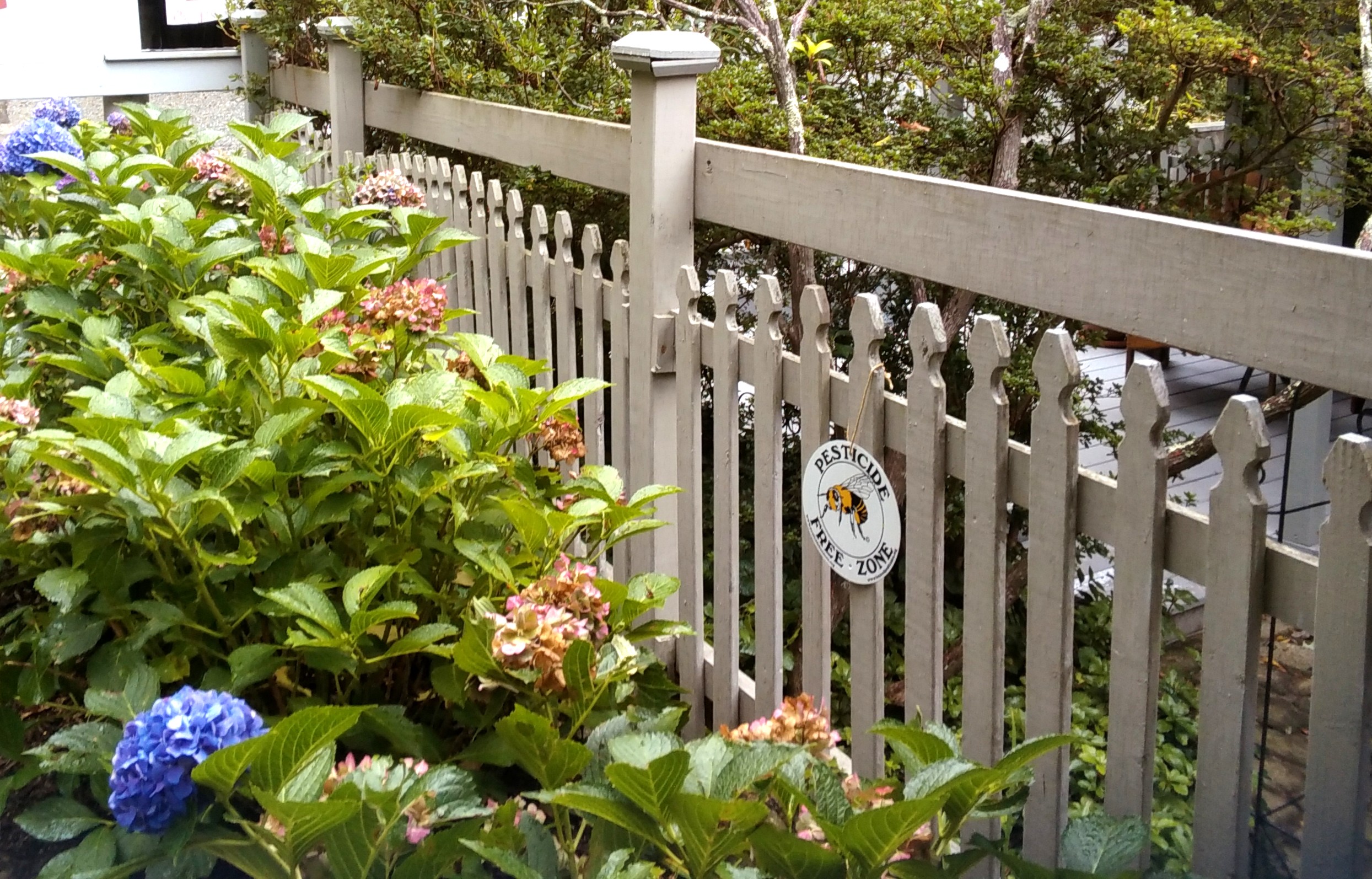 Create your own pesticide-free space in your backyard. Advertise your commitment with a Beyond Pesticides “Pesticide Free Zone” Sign. Please share with us pictures of your organic yard or local park. Tell us why pesticide-free parks are important to you.
-
- Switch from a conventional to organic diet and drastically reduce the levels of pesticided in your body, with one week on organic food showing a 70% reduction in glyphosate in the body, according to one study.
PFZ Sign Photo Contest Submission "Hydrangeas on Boone Lake" by Sharon H. from Exeter, RI, right and above.
Organic Gardening 101: Residential
Synthetic fertilizers and chemical pesticides lead to undesirable conditions that restrict water and air movement in the soil. High nitrogen fertilizers can disrupt the nutrient balance, accelerate turf growth, increase the need for mowing, and contribute to thatch buildup.
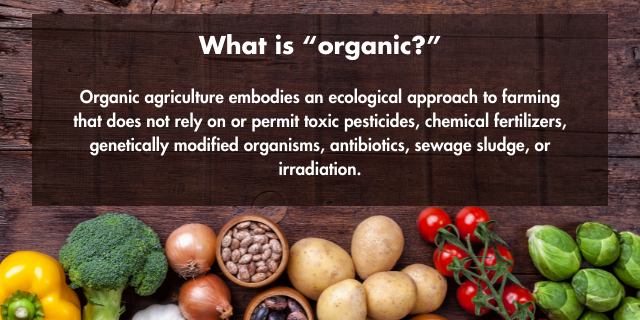
Plant Your Own Organic Garden / Buy "Straight from the Source."

-
- Prepare your spring garden the organic way by Springing Into Action.
- Join us in celebrating, propagating, and educating about a misunderstood and beneficial plant: clover.
 Have a problem with weeds taking over your yard and garden?
Beyond Pesticides' guide on how to Read Your Weeds allows people to identify weeds in their lawn and suggests non-toxic or least-toxic solutions. Additionally, Beyond Pesticides’ webpage on Ecological Management of Invasive Species is a great resource for broad weed management.
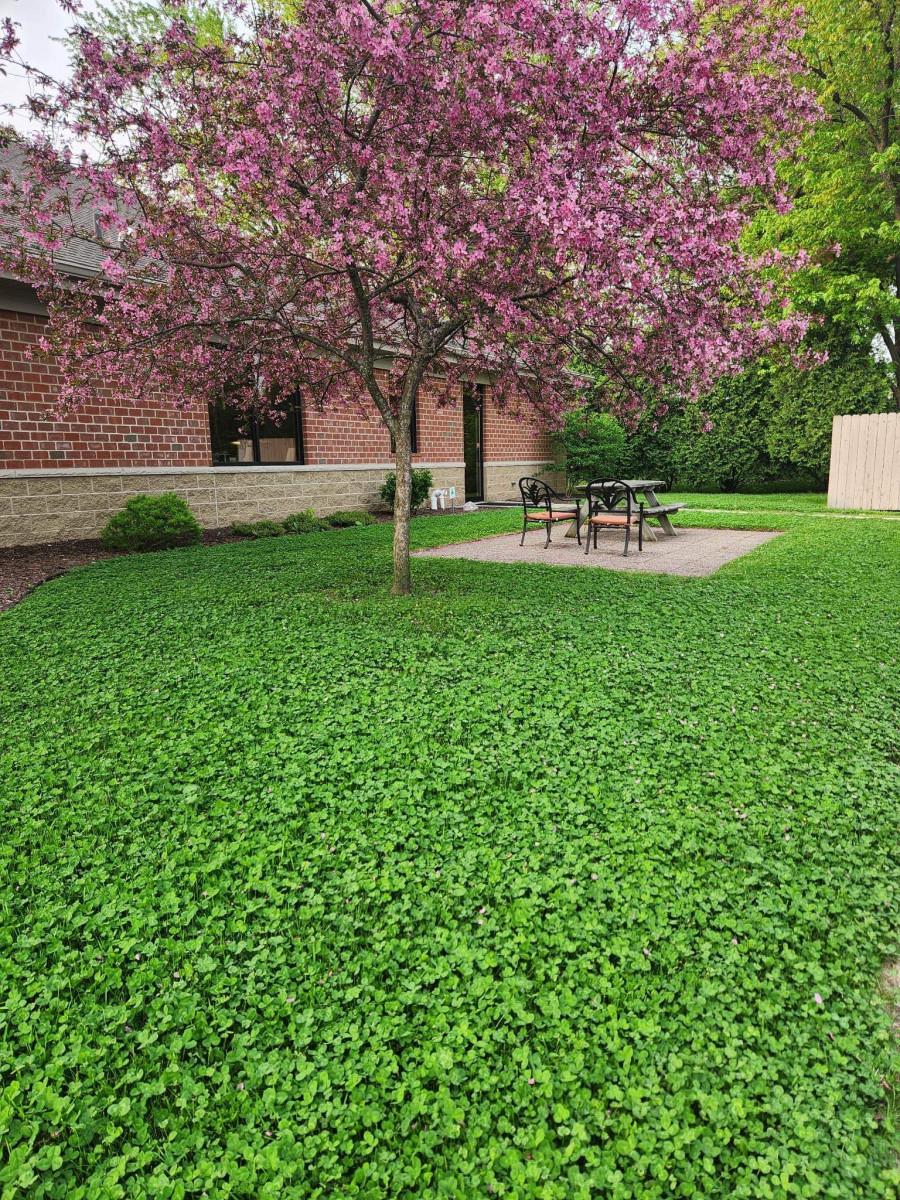
Many plants that are considered weeds have beneficial qualities. Try to develop a tolerance for some weeds in your garden. For instance, clover is considered a typical turf weed, but it thrives in soil with low nitrogen levels, compaction issues, and drought stress. See Taking a Stand on Clover: The benefits of clover to bees, soil biology, and water quality to learn more.
Art Page submission "Post-Pesticide Paradise" by JoAnne F. from Cascade, WI, above left.
-
- Become a Parks Advocate. Beyond Pesticides will develop materials for your community. Here is a new factsheet on pesticide hazards and alternatives that you can use! Here is an example of a brochure from our work in New York City.
Parks for a Sustainable Future 
Does your community have a pesticide-free park managed with organic practices? Do you wish it did? The time to take action to protect those parks and create new ones is now.
Beyond Pesticides is partnering with major retailers like Natural Grocers and Stonyfield Organic, and dozens of communities across the nation to create organic communities where local parks, playing fields, and greenways are managed without unnecessary toxic pesticides and synthetic fertilizers.
Our Parks for a Sustainable Future program provides in-depth training to assist community land managers in transitioning two or three public green spaces to organic landscape management while aiming to provide the knowledge and skills necessary to eventually transition all public areas in a locality to these safer practices.
With YOUR help, we can achieve our vision. Become a Parks Advocate today!
Parks for a Sustainable Future Program by Beyond Pesticides
Action of the Week
 This year, 2026, may be a turning point in which public outrage about the failure of the current political leadership in Congress and in the Trump administration to address the existential health, biodiversity, and climate crises is deemed politically unacceptable. Animating public concern are elected officials who call the climate crisis a hoax and dismiss the health and environmental threat associated with the weed killer glyphosate (Roundup)—as representative of the deregulation of pesticides associated with cancer and other deadly diseases.
In an action posted for Earth Day, Beyond Pesticides asks: “Does your community have a pesticide-free park managed with organic practices? Do you wish it did? The time to take action to protect those parks and create new ones is now.“
The action goes on to identify local actions and policies:
In partnership with major retailers like Natural Grocers and Stonyfield Organic, the Beyond Pesticides’ Parks for a Sustainable Future program provides in-depth training to assist community land managers in transitioning two public green spaces to organic landscape management, while aiming to provide the knowledge and skills necessary to eventually transition all public areas in a locality to these safer practices. See a map of cities where Beyond Pesticides has assisted local leaders in converting parks and recreational areas to convert exclusively to organic practices and to eliminate the use of synthetic pesticides and fertilizers.
-
- If your community is one of a growing number across the country that has taken action to protect its citizens and environment by adopting organic policies and practices in its public spaces, please take this opportunity to thank your community leaders. However, be aware that the pesticide industry is seeking to take those policies away from you.
Message: Thank you so much for implementing pesticide-free, organic policies and practices in our parks and public places! I love to spend time in our parks, knowing that I will not be exposed to toxic chemicals. It is great to know that toxic chemicals will not run off from our public spaces into streams and other water. It is wonderful to know that flowers in our parks can provide nectar to pollinators who face so many threats these days. In honor of Earth Day, thank you on behalf of our local community.
-
-
If your community has not yet taken action to protect its citizens and environment by adopting organic policies and practices in its public spaces, tell them how much you want them to do so.
-
Message: When I learned about how many communities protect their citizens and local environment by transitioning to organic landcare in parks and other public places (https://bp-dc.org/tools-for-change), I became jealous. I asked why we can’t do the same in our own community. Pesticides used in parks, playing fields, and other public places threaten our health—especially that of our children, who are closer to the ground and have greater exposure. Pesticides and chemical fertilizers run off, finding their way to streams. They also threaten pollinators, who are at risk from multiple threats. Communities no longer need to figure out how to do this alone. Beyond Pesticides’ Parks for a Sustainable Future (https://bp-dc.org/sustainable-parks-land-care-training) program aims to bridge the gaps resulting from staffing constraints and tight budgets, allowing communities to pilot the transition to organic land care on two public sites. I urge you to email [email protected] (mailto:[email protected]) or call Beyond Pesticides at 202-543-5450 to get started.
The action encourages timely advocacy as the Farm Bill moves to a vote in the House and Senate:
 There are numerous provisions—a package of provisions—in the U.S. House of Representatives Agriculture Committee Farm Bill, voted out on March 5, that seriously undermine protections of health and the environment from pesticides, according to public health and environmental advocates. In response, Beyond Pesticides and allies are calling on U.S. Representatives and Senators to reject the Farm Bill as passed out of the House Agriculture Committee and, instead, pass a one-year extension of current law to protect health and the environment.
The package of amendments covers critical areas of protection established over decades of Congressional action. While groups have called for major reforms, Beyond Pesticides says, “Existing pesticide law forms the foundation on which improvements should be made, not backsliding to give the chemical industry free rein.” (See Advocates Call on Congress To Reject House Agriculture Committee Farm Bill and Extend Current Law.)