


14
Jul
UNICEF Report Raises Alarm About Adverse Effects of Pesticides on Children’s Health
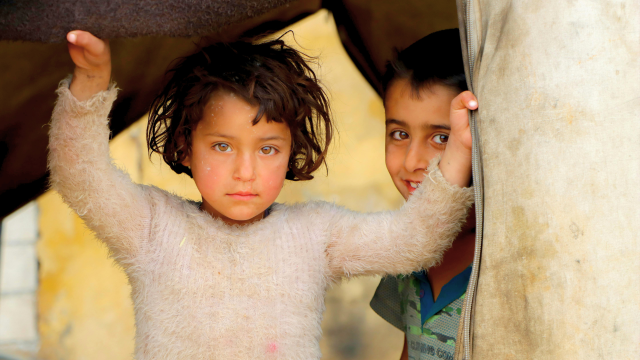
(Beyond Pesticides, July 14, 2026) “Around the world, children are born into a landscape where the doubling of pesticide use since 1990 has made these chemical substances ubiquitous in our soil and food,” said George Laryea-Adjei, PhD, UNICEF Global Program Division Director at the release of a new report—Underestimated and Overlooked: The Silent Impact of Pesticides on Children—published through an initiative of the United Nations Children’s Fund. He continued: “This report reveals a reality that is as urgent as it is ‘silent’: the profound impact of pesticides on the health and rights of the world’s most vulnerable citizens: children.”
Many important truths in this report speak to the advocates, public health professionals, and concerned families across the globe who are researching, writing, teaching, and advocating for public health and environmental protection from toxic chemicals. This report identifies the failure of existing regulatory structures to ensure basic protections and cites scientific evidence, investigative reporting, and litigation, concluding that synthetic pesticides are inconsistent with sustainability and human health.
Main Findings
This report was coauthored by UNICEF staff and numerous stakeholder groups, including nonprofits, regulators, and academic institutions. The authors cite numerous data sources, including existing peer-reviewed science, World Health Organization (WHO) and Food & Agriculture Organization (FAO) sources, and PEST-CHEMGRIDS (global gridded maps of the top 20 crop-specific pesticide application rates from 2015 to 2025). Besides the report’s topline findings, concerns are identified in the following categories: Scale of Pesticide Use, Children’s Vulnerability, Health Effects, Scale of Exposure and Poisoning Data, and Pesticide Life-Cycle Management Gaps.
Topline Findings
- Shocking Biomonitoring Results. “80–90% of children in high-income countries have been exposed to pesticides, primarily from dietary exposure.”
- Proximity Exposure to Pesticides. “490 million children, including 124 million under 5, face potential exposure to agricultural pesticides.”
- Child Labor & Pesticide Exposure. “83.4 million children who work in agriculture are likely exposed to pesticides from direct spraying and drift. Agriculture accounts for 61% of all child labor.”
- Main Recommendations Focus on Risk Mitigation Rather Than Transition. Many of the recommendations operate under the assumption that the cost-benefit analysis and risk-centric approach to pesticide regulation is the only tenable pathway forward.
Scale of Pesticide Use
- Projected Doubling of Pesticide Production. “Following World War II, production of synthetic organic chemicals increased exponentially. In 2022, total pesticide use in agriculture was 3.7 million tons of active ingredients, having doubled since 1990.” (FAO, 2024)
- Total Global Pesticide Use Increases Dramatically. “According to FAO, from 2000 to 2022, total global pesticide use increased by 70 per cent to 3.7 million tons, with most of this increase occurring between 2000 and 2016.” (FAO, 2022)
- Agricultural Pesticides Dominate. “According to the World Bank Data Group, an estimated 85 per cent of the pesticides applied globally are used for agricultural purposes.” (Maggi et al. 2019)
Children’s Vulnerability
- Neuroblastoma Risks. “A recent meta-analysis of nine studies showed that neuroblastoma, the most common solid tumor seen in children under 1 year of age, is 1.6 times more likely with pre-conception/antenatal exposure to pesticides.” (Khan, Feulefack, and Sergi, 2022)
- Childhood Leukemia Risks. “A 2019 systematic review and meta-analysis showed a significantly increased risk of childhood leukemia, the most common pediatric cancer, with antenatal exposure to residential pesticides including indoor insecticides.” (Van Maele-Fabry, Gamet-Payrastre, & Lison, 2019)
- Forced Agricultural Labor Imposes Threats. “According to the most recent assessments for 2020, some 1.56 million children work on cocoa farms in Côte d’Ivoire and Ghana, where almost 60 per cent of the world’s cocoa is produced. Of these, 43 per cent engaged in dangerous activity, including the use of agrochemicals.” (S. Department of Labor, accessed 2025)
- Pesticides in the Big Apple. “In New York State in the United States, more pesticides were applied in the 1990s in the dense areas of New York City… than in the rural agricultural counties in the state. Chlorpyrifos was the most heavily used pesticide in 1997 in New York City.” (Landrigan et al. 1999; NYC Department of Planning, Accessed 2025)
- Pesticide Exposure Near Childcare Facilities. “In the United States, the first National Environmental Health Survey of Licensed Child Care Centers in 2006 found that approximately 63 per cent of the centers reported using pesticides and at least one pesticide was detected in over 89 per cent of the centers.” (Tulve et al. 2006)
Health Effects
- Neurodevelopmental Effects. “A 2019 systematic review of 50 studies done between 1973 and 2019 concluded that antenatal exposure to organophosphates contributes to neurodevelopmental disorders in toddlers, preschool and school-aged children.” (Sapbamrer and Hongsibsong, 2019)
- Genotoxic Effects. “A review of publications from 2007 to 2021 of studies performed in Latin America identified 11 papers investigating the genotoxic effects of pesticides in children.” (Zúñiga-Venegas et al., 2022) “Eight of these papers demonstrated an association between pesticide exposure and cytogenetic or DNA damage.”
- Cancer Risks. “A 2017 systematic review and meta-analysis concluded that postnatal and antenatal residential exposures to pesticides were associated with increased risk of childhood brain tumors.” (Van Maele-Fabry, Gamet-Payrastre, & Lison, 2017)
- Respiratory Effects. “In a 2020 systematic review, 15 of 19 studies (79 per cent) identified positive associations between exposure to agricultural pesticides in children and childhood respiratory and allergic effects, primarily asthma.” (Buralli, Dultra, & Ribeiro, 2020)
- Endocrine Effects. “There are over 1,000 synthetic chemicals, including certain pesticides, which are known or potential EDCs.” (Ghassabian et al., 2022)
- Birth Outcomes. “Urogenital anomalies, including hypospadias, cryptorchidism and others, were the most thoroughly investigated category of anomalies associated with exposure to pesticides.” (Kalliora et al., 2018)
Scale of Exposure & Poisoning Data
- World Health Organization (WHO) Mortality Data. WHO documents 375 global annual cases of fatal pesticide poisonings from 2017 onwards. “In 2021, a national report of India gives 178 fatal cases of accidental pesticide poisoning in children below 14 years and 583 cases in the age group of 14–17 years. This is six times the number of annual cases documented in WHO data for all countries together.” (National Crime Records Bureau, 2021)
- Biomonitoring Data. “Data from the poison centers in the United States for 2021 show a total of 32,535 pesticide exposure cases in children and adolescents. This would result in a rate of 39 per 100,000… If all countries had the same poisoning rate as the United States, that would mean about 1 million poisonings in children.”
- PEST-CHEMGRIDS modeling. “124 million children under the age of 5 (18.5 percent) and 490 million children and adolescents (18.8 percent) may face potential exposure to pesticide active ingredients.”
- “This number represents only a crude proxy for a limited number of pesticides, which does not account for various exposure routes and environmental factors. Consequently, the relationship between pesticide application rates and the actual magnitude of human exposure or health risk remains uncertain and unmeasured.”
Pesticide Life-Cycle Management Gaps
- Lack of Essential Infrastructure. “As of 2019, only 47 per cent of WHO Member States had a poison center, with notable gaps in the African and Eastern Mediterranean regions and in small island states in the Western Pacific Region.” (WHO, 2021)
- Child Labor Constraints. “Nearly 138 million children – 59 million girls and 78 million boys – are in child labour, accounting for almost 8 per cent of all children globally… Agriculture accounts for the largest share of children in child labour, at 61 per cent globally.” (International Labor Organization and WHO, 2024)
- Insufficient Healthcare Access. “According to WHO, approximately half the world’s population lacks access to essential health care.” (WHO, 2025)
Previous Coverage
There is significant additional peer-reviewed literature on the impacts of pesticide exposure on children’s health. A review in the International Journal of Cancer links pesticide exposure, particularly in areas with high agricultural crop density, to increased risks for childhood cancers. The team of researchers from the University of Nebraska-Lincoln and University of Nebraska Medical Center, in analyzing epidemiologic studies published between January 1980 and September 2022, says that their “scoping review affirms that a robust body of epidemiology literature already informs how parental and childhood exposure to environmental chemical exposures can be associated with children’s incidence of pediatric leukemia and brain cancer.” (See Daily News here.)
A study from Ecuador establishes for the first time the developmental pattern of nervous system toxicants—widely used in agriculture, mosquito control, and landscaping—on healthy neurological and brain development in children. It is firmly established that widely used organophosphate pesticides are severely toxic to a broad range of organisms. In what is known as their “classic” mechanism of action, they inhibit acetylcholinesterase (AChE), an enzyme that breaks down the neurotransmitter acetylcholine (ACh), including in neuromuscular junctions in the brain. Not enough AChE leads to a buildup of ACh in motor neurons. Organophosphates deplete AChE, and an acute dose can paralyze the heart and lung muscles, causing death. Chronic exposures are implicated in numerous neurodegenerative diseases, including Alzheimer’s, Parkinson’s, and amyotrophic lateral sclerosis (ALS). Beyond Pesticides’ Gateway on Pesticide Hazards and Safe Pest Management has detailed information on the organophosphates malathion, chlorpyrifos, diazinon, and others. (See Daily News here.)
There is also the question of pesticide dependency and genetically modified organisms in agriculture. Published in Pediatrics by the American Academy of Pediatrics, the authors call attention to the widespread use of genetic engineering (GE) and genetically modified organisms (GMOs) in the U.S. food supply and the subsequent health risks for children and consumers. As the authors state: “Although GMO technology could be used to increase the micronutrient content of foods, this does not occur in the United States; instead, GMO technology has been used to make crops resistant to chemical herbicides. As a result, herbicide use has increased exponentially.” (See Daily News here.)
Adverse neurodevelopmental outcomes in children 4–6 years old occur with reported maternal occupational exposure during pregnancy, as published in a study in PLOS One by researchers at Muhimbili University of Health and Allied Sciences in Tanzania and the Centre for International Health at the University of Bergen in Norway. “Our results show that self-reported maternal exposure to pesticides through direct spraying during pregnancy was associated with lower scores in social-emotional and executive function domains among children,” the authors state. Additionally, the authors note that they found an association between social-emotional scores in children and weeding practices of their mothers during pregnancy, as well as reduced overall neurodevelopmental scores following direct maternal pesticide exposure. (See Daily News here.)
Call to Action
You will be notified of important actions each week by subscribing to the online Weekly News Update and Action of the Week! If you would like to review previous Actions of the Week that are still live, see the Action of the Week Archive.
Beyond Pesticides engages with communities and local governments across the nation through the Parks for a Sustainable Future Program to transition public parks and playing fields to organic land management. You can become a Parks Advocate today and bring about the organic transition to your community!
To review our research library that tracks the independent peer-reviewed scientific literature on pesticides and public health, please visit the Pesticide-Induced Diseases Database, including relevant sections on children’s health.
All unattributed positions and opinions in this piece are those of Beyond Pesticides.
Source: UNICEF (Children’s Environmental Health Collaborative)