


11
Jun
Adding to Wide Body of Science, Study Finds Pesticide Residues in Honey Bee Colonies Cause Acute Mortality
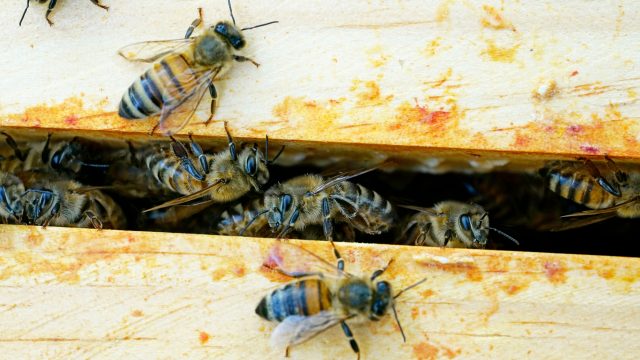
(Beyond Pesticides, June 11, 2026) A study of honey bee colonies in Florida and California, published in Environmental Toxicology and Pharmacology, finds elevated mortality from pesticide residues, including those that have been documented to threaten pollinators. As the authors describe, “While bees die from multiple, often interacting, stressors, here we show single contributors at levels capable of causing acute harm.” The presence of miticides, fungicides, herbicides, and insecticides within the bee colonies, including in the bodies of dying bees, further highlights pesticides as drivers of bee declines.
By sampling both dying bees and in-house bees for chemical residues, the researchers are able to compare symptomatic colonies and control colonies. The authors note, “Our findings differ from previous screenings, which cast a broad net, screening agrochemicals in colonies nationwide, and not necessarily from impacted operations.” This study, however, shows the presence of specific pesticide residues in commercially managed colonies after die-off incidences. The neonicotinoid insecticide imidacloprid, in particular, is widely detected and found in high levels, with the researchers identifying the compound as the largest contributor to bee death.
Background
Scientific literature linking pesticides, including neonicotinoids, to adverse impacts on pollinators continues to mount, as do the devasting population declines of pollinators and other insects. This “insect apocalypse” has been reported with one-quarter of the global insect population lost since 1990. As professor of biology, researcher, and author, Dave Goulson, PhD, University of Sussex, says, the drastic decline in insect populations that is occurring threatens all ecosystems. In an essay in Current Biology, he states, “Insects are integral to every terrestrial food web, being food for numerous birds, bats, reptiles, amphibians and fish, and performing vital roles such as pollination, pest control and nutrient recycling. Terrestrial and freshwater ecosystems will collapse without insects… we may have failed to appreciate the full scale and pace of environmental degradation caused by human activities in the Anthropocene.”
As the study authors point out, both managed and wild pollinators deliver crucial ecosystem services, most notably pollination, and interact “across diverse landscapes to enable reproduction in nearly 75% of the world’s flowering plants.” (See study here.) The European honey bee, Apis mellifera, is both a wild and a managed pollinator in North America and is considered a generalist pollinator, meaning it visits a wide variety of plant species to feed on nectar and pollen.
With the reliance on chemical solutions, such as in chemical-intensive agriculture, harmful pest management practices threaten pollinators and overall insect biodiversity. Bees encounter pesticides directly and indirectly as they forage, which can then act synergistically (causing a greater combined effect) with other chemicals and stressors (like parasites) to cause declines in health.
Study Methodology and Results
The researchers screened 132 colonies from 23 commercial beekeeping operations in Florida and California after they experienced heightened colony losses. In sampling bees and their products (wax and bee bread, a fermented mixture of flower pollen, nectar, and bee saliva) for chemical residues, the results show high levels of chemical residues in all colony matrices. The colonies in Florida were sampled during or right after mass bee die-offs and before transport to California while colonies in California were sampled at the start of almond pollination. Most notably, levels of miticides (applied directly by beekeepers), as well as fungicides, were the most abundant for all colonies.
While residues of herbicides and insecticides varied between colonies, imidacloprid contributes 99.9% to overall hazard quotients (HQ). In finding imidacloprid in high prevalence and high levels in a subsample of dying bees, this highlights “a survivorship bias, where dying bees had active ingredients known to have acute toxicity to bees,” while survivors within the hive did not experience the same exposure and subsequent residues prior to sampling.
Additional results include:
- “A higher prevalence of each pesticide class was detected in adult bees from California than bees collected in Florida. Herbicides were detected in 1.5% of adult bees from Florida, while 50% of bee samples collected in California had detectable levels of herbicides. Insecticides were detected less frequently in adult bee bodies from Florida (27.3%) than in adult bee bodies from California (80%).”
- Beekeeper-applied miticides are detected in higher concentrations and frequencies in bees, wax, and bee bread samples from Florida than any other class of pesticides. Similarly, miticides are also detected at the highest frequency in California adult bee samples. Among the miticides, amitraz is the most frequently observed miticide, appearing in the majority of samples in all colony matrices.
Research finds that miticides increase the vulnerability of hives to pesticides and other stressors. It is not surprising that miticides are found in the hives, as the literature shows that mite problems increase with bee exposure to neonicotinoids. A 2024 article in Entomology Today, a publication of the Entomological Society of America, highlights the important findings of a study published earlier in the same year in the Journal of Insect Science showing elevated mite problems associated with neonicotinoid exposure. While there has been debate on whether neonicotinoid insecticides or Varroa mites (Varroa destructor) are more detrimental to the survival of bees, evidence suggests that neonicotinoids are not only harmful individually but can increase vulnerability to parasitism from mites in western honey bees. The Entomology Today article reads: “Some researchers and organizations have pointed to neonics as directly harming bees. Others have pointed to other issues, like Varroa mite infestation, as more hazardous to honey bee populations.” There is scientific evidence supporting each claim, as both cause stress to bee species that can lead to population decline. The study in the Journal of Insect Science, however, is “the first experimental field demonstration of how neonicotinoid exposure can increase V. destructor populations in honey bees and also demonstrates that colony genetic diversity cannot mitigate the effects of neonicotinoid pesticides.”
The presence of Varroa mites in combination with imidacloprid increases the risk of bee mortality and disrupts the larval gut microbiome, according to a study of the synergy between V. destructor, a parasitic mite that attacks and feeds on honey bees, and imidacloprid. The study, published in Pesticide Biochemistry and Physiology, adds to the growing body of science on the severely declining bee population by investigating the toxic effects of both the parasites and pesticide stressors in honey bees. (See Daily News here.)
The current study results highlight that honey bees are “exposed to significant levels of pesticides via all colony matrices, consistent with multiple large-scale nationwide screenings since 2010.” (See here, here, and here.) With the detection of imidacloprid in all of the affected operations in this study, at levels that are higher than those documented for causing acute toxicity, this shows the immense threats to pollinator populations with the use of neonicotinoid insecticides, as well as other pesticide products.
“[E]xposures with extreme-high risk HQ cores are likely to be impacted by acute toxicities,” the researchers summarize. They continue: “The current scientific consensus assumes bee declines reflect multiple, often interacting, stressors, leading to a ‘death by a thousand cuts.’ Indeed, surveys of honey bees in decline have shown multiple potential actors, from viruses to gut parasites and chemical stress as potential causes. This study shows that honey bees can be exposed to concentrations of singular stressors at levels known to cause acute harm and loss of life.” Acute mortality, as well as sublethal and synergistic effects, all contribute to declines in pollinator populations. From mass bee die-offs where dead bees are found to documented impacts to navigation that could prevent bees from returning to the hive, many effects are occurring that threaten bee survival.
Previous Research
This study is consistent with findings from previous scientific literature, including a multi-year, national analysis of pesticide residues. (See study here.) Additional recent research documents the adverse effects of pesticides on bee health and survival. In a study published in Environmental Pollution, researchers detected 15 currently used pesticides (CUPs)—including 10 pesticide compounds detected but not applied within the study’s managed fields— in the pollen of beehives in an environment meant to reflect a typical honey bee foraging range. The detection of pesticides that were not directly applied within the study’s target radius demonstrates the pervasiveness of pesticide drift into soils, streams, and bodies. The findings are particularly concerning, given the toxicity hazards to honey bees associated with pesticide exposure in this study and bolstered by other studies, resulting in documented threats to their health. (See more here.)
In the Daily News article entitled Insecticides Gravely Threaten Honey Bee Gut Microbiome, Study Findings Expand on Previous Research, a study published in Insects finds threats to Italian honey bees (Apis mellifera ligustica) following exposure to insecticides with contrasting toxicity levels. Both the high toxicity and low toxicity compounds impact honey bee gut bacteria and gut microbial composition, showing how even “reduced risk” insecticides can have sublethal effects and jeopardize pollinator health. Additional research finds that neonicotinoid insecticides cause deadly overheating behavior and reproductive dysfunction in honey bees. (See here and here.)
A study of two pollinator species, honey bees and small carpenter bees (Ceratina calcarata), finds oxidative stress—an imbalance between antioxidant defenses and excess reactive oxygen molecules (species), or ROS—resulting from exposure to non-living (abiotic) stressors, such as synthetic chemicals, leading to cell damage. Regulatory bodies, including the U.S. Environmental Protection Agency (EPA), do not routinely evaluate oxidative stress as a standalone or required endpoint in standard pesticide registration protocols. In comparing pollinator responses to different pesticides and pest control management practices, the lowest levels of OX are exhibited in organically managed systems. (See Daily News here.)
The Organic Solution
Rich biodiversity is imperative for ecosystem functioning. Insects, such as honey bees, are invaluable for pollination, which many plants depend on for survival and reproduction, including those in food production. The role of pollinators in global crop yields and biodiversity in natural ecosystems, however, is gravely threatened by environmental contaminants, as documented in the current study and a wide body of other peer-reviewed, independent research.
As a solution, organically managed systems can help protect and support pollinator populations. One study, published in Global Ecology and Conservation, builds on the breadth of existing research in recent years that underscores the adverse public health and biodiversity effects associated with a food system that is drenched in synthetic chemicals, as well as additional evidence of the ecological and economic benefits of organic agriculture. In investigating the biodiversity of agricultural landscapes in organic and nonorganic areas in “bee hotels,” the researchers find that there is a positive correlation between organically managed fields and numerous indicators of improved pollinator health, including an increase in bee abundance, species richness, and diversity. (See Daily News here.)
To learn more about the effects of pesticides on bees, other pollinators, and other beneficial organisms, visit the What the Science Shows on Biodiversity resource page. Adopt pollinator-friendly practices for Protecting Honey Bees and Wild Pollinators From Pesticides as you Spring Into Action this season. For additional benefits of organic, see Study Highlights Benefits of Organic Agriculture for Pollinator Health, Building on Existing Research.
All unattributed positions and opinions in this piece are those of Beyond Pesticides.
Source:
Lamas, Z. et al. (2026) Chemical residues in declining commercial honey bee colonies, Environmental Toxicology and Pharmacology. Available at: https://www.sciencedirect.com/science/article/abs/pii/S1382668926001262.