


20
May
Elevated Oxidative Stress Damages Life-Essential Cell Function in Bees on Conventional, but Not Organic, Farms
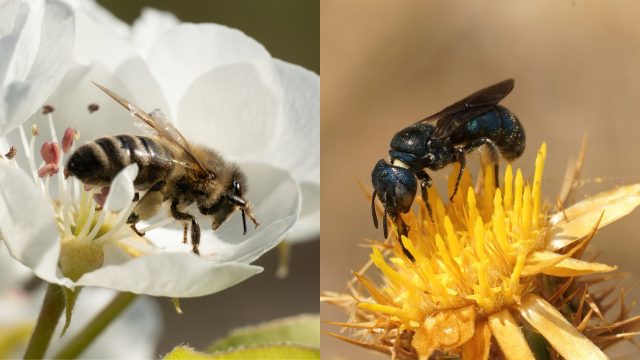
(Beyond Pesticides, May 20, 2026) A study of two pollinator species, honey bees (Apis mellifera) and small carpenter bees (Ceratina calcarata), finds oxidative stress (OX)— an imbalance between antioxidant defenses and excess reactive oxygen molecules (species), or ROS—resulting from exposure to non-living (abiotic) stressors, such as synthetic chemicals, leading to cell damage. Regulatory bodies, including the U.S. Environmental Protection Agency (EPA), do not routinely evaluate oxidative stress as a standalone or required endpoint in standard pesticide registration protocols. In comparing pollinator responses to different pesticides and pest control management practices, the lowest levels of OX are exhibited in organically managed systems, as described in the research published in Physiological Entomology.
Quantifying the oxidative stress levels in bees and their larval stages from three landscapes (conventional, organic, and roadside) shows that minimum exposure to agrochemicals and high traffic-related pollutants results in the lowest levels of OX. “Overall, these findings show that variation in pesticide residue profiles across landscapes is associated with different OX responses in bees,” the authors state. “Given the essential ecosystem services provided by bees, our findings underscore the urgent need for landscape-level strategies to reduce pollinator exposure to chemical stressors.”
Background
Oxidative stress occurs when there is a disruption of normal cell-signaling and molecular damage, leading to an imbalance of reactive oxygen species (ROS) and free radicals (unstable oxygen molecules) that the body is unable to detoxify. When antioxidant defenses are overwhelmed, and there are too many free radicals, this causes damage to cells, proteins, and DNA. Chronic OX plays a major role in the development of many diseases, including cancer, diabetes, and neurodegenerative diseases such as Alzheimer’s and Parkinson’s.
A wide body of science links pesticide exposure to oxidative stress and other adverse health effects, particularly in pollinators. Bees and other species play a critical role in agriculture by providing ecosystem services, and, as a result, the threats from chemical-intensive systems directly threaten productivity. “Despite the critical role of pollinators in crop production, modern farming systems are often not designed to support their health,” the researchers state. “In the United States, farming is dominated by conventional farms that rely on chemical pest control, and organic farms utilize non-chemical methods.” Organic farming practices represent an ecological approach that protects pollinators and all wildlife. By safeguarding biodiversity, organic methods offer a sustainable, holistic solution to land management.
Studies (see here and here) also show that insect abundance and plant diversity “are typically higher on organic farms, likely due to the greater availability of floral resources.” In analyzing honey bees and small carpenter bees, this study captures the effects of different landscapes on two ecologically important pollinator species with “contrasting sociality, foraging strategies, and nesting ecology,” both of which act as indicator species of healthy ecosystems.
Methodology and Results
In the study, the authors aim to determine “the changes of OX and pesticide exposures in different farm landscapes (conventional, organic, and roadside) on pollinator health.” The experiment was performed in three farm landscapes in Central Ohio, encompassing organic farms, conventional farms, and roadside habitats. At each collection site, bee hives were installed in 2022 and 2023, and bees were collected for sampling. Pesticide residues in pollen samples were also analyzed.
As the authors note: “Our findings demonstrate a clear landscape-dependent variation in oxidative damage, with significantly elevated lipid peroxidation levels (MDA) in roadside-collected bees compared to those from organic or conventional landscapes. However, pesticide residues and diversity were higher in conventional habitats compared to other organic and roadside habitats.” This highlights how organic farms hold the lowest risk of OX in pollinators, while roadside habitats contain many abiotic factors that cause OX.
The researchers continue, saying: “The present findings were consistent across both bee species and also suggest that local environmental conditions and management intensity have measurable physiological impacts on pollinators. While the present results of OX biomarkers for both bee species provide mechanistic insight into sublethal physiological responses, the ecological implications include potential effects in survival, reproduction and pollination efficiency.”
Previous Research
Additional scientific literature highlights the effects of pesticides and other environmental contaminants on oxidative stress. As the authors highlight, studies find that exposure to various pesticides in bees increases the production of ROS that can lead to OX. (See here and here.) Research shows that exposure to the herbicide atrazine elevates OX in honey bees. In one study, the insecticides flupyradifurone and sulfoxaflor are shown to cause an increase in ROS. More research shows that in bees, the accumulation of oxidative damage contributes to senescence (the process of aging). Additionally, chronic elevations in OX biomarkers are linked to adverse effects on pollinator health, such as impaired survival, immune functioning, and reproduction. (See here, here, and here.)
A study published in Insect Biochemistry and Molecular Biology finds that the widely used azole fungicide, tebuconazole, has damaging impacts on the redox homeostasis (the process of maintaining balance between oxidizing and reducing reactions) and fatty acid composition in honey bees’ brains via oxidative stress. Acute, field-realistic sublethal exposure to tebuconazole decreased the brain’s antioxidant capacity, key antioxidant defense systems, and oxidative degradation and alteration of lipids (fats) in the brain. Thus, this study adds to the scientific literature on the adverse effects of chemical exposure on pollinator health, especially in sublethal concentrations.
The results show that tebuconazole has a profound impact on oxidation in the brain. It decreases antioxidant capacity, reducing the ratio of oxidized glutathione for preventing damage to important cellular components and disrupting antioxidant enzymatic defense systems, inducing lipid (fat) peroxidation (oxidative degeneration of fats) through elevated malondialdehyde levels. This alters the fatty acid profile in honey bee brains. Degenerating cognitive skills can threaten honey bee survivability, decreasing colony fitness and individual foraging success. A multitude of research attributes the decline of insect pollinators (e.g., commercial and wild bees and monarch butterflies) over the last several decades to the interaction of multiple environmental stressors, from climate change to pesticide use, disease, habitat destruction, and other factors. (See Daily News here.)
Another study published in PLOS One finds that exposure to insecticides increases cell death (apoptosis) and oxidative stress in honey bees. “The average life span of a worker honeybee is five to six weeks in spring and summer, so if you are reducing its life span by five to 10 days, that’s a huge problem,” said Ramesh Sagili, PhD, study coauthor. “Reduced longevity resulting from oxidative stress could negatively affect colony population and ultimately compromise colony fitness.” (See more here.)
Previous Daily News, entitled “Neonicotinoid Insecticide Linked to Honey Bee Decline, Threatening Reproductive Function of Hive,” covers a novel study of chronic toxicity of the neonicotinoid insecticide thiamethoxam to honey bees. The research, published in Insects, finds sublethal effects that threaten the survival of bee larvae and the health of bee colonies. “We evaluated the effects of thiamethoxam on the entire larval development cycle of reproductive bees and conducted a comparative analysis, demonstrating that thiamethoxam significantly alters ecdysone [a hormone that controls molting in insects] and juvenile hormone titers [hormones for insect growth] in both queen and drone larvae, impairing metamorphosis and reproductive development,” the authors state. The results also show that enzyme activity, particularly in those related to oxidative stress and detoxification, is impacted, with both drone and queen larvae experiencing dose-dependent decreases. The hormones related to insect development and growth also exhibit dose-dependent effects in all treatments.
The Organic Solution
To mitigate the effects documented in the research above, as well as numerous others on pollinators and other insects, Beyond Pesticides urges the widespread shift to organic agriculture and land management. Not only does this holistic solution remove the use of petrochemical pesticides and synthetic fertilizers, but it also protects and enhances biodiversity and mitigates both the climate change and public health crises we are currently experiencing. As shown in the current study, organic systems have the lowest levels of OX in the two bee species, providing a protective environment despite the numerous environmental contaminants that they can encounter.
To learn more about the science on pesticides and how they impact ecosystem functioning, see What the Science Shows on Biodiversity. For more information on the direct impacts of organic practices on pollinators, see Study Adds to Wide Body of Science Highlighting Benefits of Organic for Insect Biodiversity and Protecting Pollinators: Stopping the Demise of Bees. Additional health and environmental benefits are available here and here.
Spring Into Action and help make pollinator-friendly outdoor spaces. If you want to grow your own vegetables/fruits to eat or flowers for pollinators, make sure that your seeds and plants are free from harmful pesticides. Often, seeds and plants in many garden centers across the country are grown from seeds coated with toxic fungicides and bee-harming neonicotinoid pesticides or drenched with them. Ensure a pesticide-free garden by planting organic seeds and plants! Learn more with the BEE Protective Habitat Guide, which provides information on creating native pollinator habitats in communities, eliminating bee-toxic chemicals, and other advocacy tools.
All unattributed positions and opinions in this piece are those of Beyond Pesticides.
Source:
Briscoe, K. et al. (2026) Oxidative stress in honey bees (Apis mellifera) and small carpenter bees (Ceratina calcarata) across different landscapes, Physiological Entomology. Available at: https://resjournals.onlinelibrary.wiley.com/doi/pdfdirect/10.1111/phen.70046.