


05
Jun
Robust Science on Transgenerational Health Effects Tied to Pesticide Exposure, Highlights Regulatory Gaps
(Beyond Pesticides, June 5, 2026) With increasing research covered by Daily News showing pesticides linked to epigenetic effects (alter gene expression), the mechanism has far-reaching implications for protecting health and the environment. It also raises issues related to the regulatory review process, which is inadequate in assessing this mechanism. Since the discovery of DNA, a principle called the “central dogma” has dominated genetics. This dogma states that genetic processes are a one-way street: only changes to DNA in germ cells (eggs and sperm) trigger processes in RNA and then proteins to effect changes in tissues and cells throughout the body. Any suggestion that environmental exposures, for example, could alter gene expression except in the first, exposed generation, was dismissed as “Lamarckian” and unscientific. And only changes to genes themselves could be inherited.
The theory of epigenetics began developing in the 1950s, and it gradually became clear that gene expression was modifiable by external factors. Cells do have numerous ways of choreographing genes, determining which ones are turned on and off at which times and in which places. In fact, this choreography is absolutely necessary for the development of an individual from pre-conception through fertilization and the progress of an embryo to a fetus to a newborn.
Epigenetics is conserved across every domain of life, from archaea and bacteria to humans. Epigenetic mechanisms do not change genes themselves, but they manage that vast library of potential tools that cells and whole organisms have to work with. The gene may be selfish, as Richard Dawkins, PhD, famously claimed, but it is highly regulated by the rich tapestry of other cellular agents and influenced by many external factors.
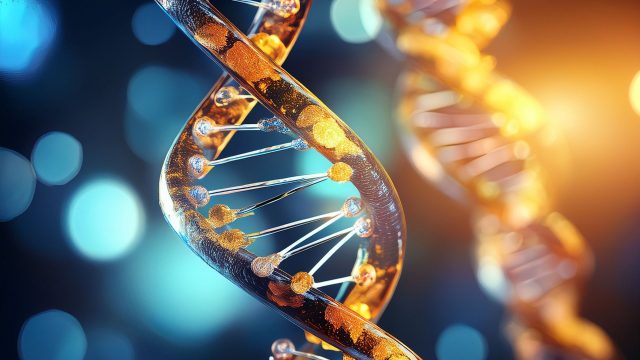
Epigenetic mechanisms consist mostly of a small set of molecules that attach to particular sites along the DNA helix, controlling whether proteins can access a gene and activate it. External forces—food, toxicants, pharmaceuticals, reproductive status, and other hormonal states—can affect how molecules attach to the DNA helix and regulate gene expression. The epigenetic unit of most interest is the methyl molecule, which attaches to the helix often at points where cytosine and guanine are connected by a phosphorus bridge, known as CpG islands. These sites play profound roles in numerous diseases, including metabolic and autoimmune disorders, blood cancers and tumors, as well as reproductive disorders.
In the late 1990s, it was discovered that interference with epigenetic processes during development could have consequences for ensuing generations. There are three generations defined as “multigenerational epigenetic inheritance”: A pregnant woman’s exposure to a fungicide, for example, would affect not only her and her embryo or fetus, but also her offspring’s children, because a female develops all the eggs she will ever produce while a fetus, and they will be exposed to the substance while she is in utero. A male fetus’s machinery for producing sperm later will also be configured in utero in response to the fungicide. Thus, those three generations have all been directly exposed to a disruptive substance. From the fourth generation on—the founding mother’s great-grandchildren—the process is “transgenerational” rather than “multigenerational”; those descendants have never been directly exposed, yet multiple types of damage continue to manifest.
Michael Skinner, PhD, a systems biologist emeritus at Washington State University and a pioneer of transgenerational epigenetics, has now shown that these effects can persist for 20 transgenerational iterations—and they change over time. Dr. Skinner has long worked with the fungicide vinclozolin, used on fruit, beans, onions, and turf, and to control residential mold. It is an endocrine disruptor with reproductive effects, a possible carcinogen, toxic to aquatic organisms, and a sensitizer/irritant. It is a potent anti-androgen, meaning that it damages normal male development of reproductive structures, reducing fertility. Vinclozolin and its metabolites attach to androgen receptors, suppressing the function of testosterone and a suite of related steroid hormones.
Dr. Skinner’s experiments with a lineage of Sprague-Dawley rats are carefully structured to track the effects of exposure during development. He outbreeds each generation to an unexposed mate to avoid confusion and complications from inbreeding. Because the number of eggs produced by females is relatively small compared to the number of sperm produced by males, the researchers use only sperm to follow the epigenetic consequences in each generation, although they observe the effects in both male and female offspring. They analyze both the DNA methylation patterns and the physical health of each generation.
The results of Dr. Skinner’s most recent research, published on February 17 in the Proceedings of the National Academies of Sciences, are heartbreaking and horrifying. The effects, Dr. Skinner and his colleagues suggest, accumulate over time, disturbing reproduction from many angles. Over 20 generations, mating failure increases. In males, every generation experiences significant levels of apoptosis (programmed cell death) in testicular cells destined to produce sperm. Although this trend stabilizes through the 17th generation, after that, apoptosis spikes. Male fertility declines overall. The female rats experienced severe and fatal difficulties during labor, which was often prolonged beyond exhaustion, and their pups usually died. These parturition abnormalities begin to appear in about the 14th generation and worsen through the 23rd generation. The Skinner group notes that most of the female rats suffering from labor distress are also obese or overweight. These conditions raise cholesterol, and high cholesterol can disrupt and inhibit uterine contractions.
But reproduction is not the only domain affected. As the authors write, “The modified germline epigenome influences the epigenetic profiles of embryonic stem cells and will subsequently affect the epigenomes of all somatic cells in the next generations (emphasis added). This means that all tissues, not just reproductive organs, are influenced by that original exposure. In addition to ovarian, prostate, and testis pathologies, the researchers find sharp increases in kidney pathologies in both sexes between the first transgeneration and the 23rd. Sprague-Dawley rats are susceptible to kidney disease as they age, but these pathologies emerge at one year.
Dr. Skinner has also demonstrated epigenetic transgenerational effects of exposure to DDT, glyphosate, atrazine, dioxin, DEET, permethrin, methoxychlor, hydrocarbons and plastics-derived compounds. He published a study in 2023 in which he exposes the first gestating female rat to vinclozolin, her gestating daughter to jet fuel, and her gestating granddaughter to DDT to try to determine the cumulative transgenerational epigenetic effects of multiple toxicant exposures. The fifth, or first transgenerational descendants, experience significant spikes in testicular, prostate, kidney, and ovarian diseases as well as obesity. The transgenerational females, in particular, suffer from multiple diseases—33 out of 47 female animals compared to 17 out of 50 males.
Clearly, given the evidence from both Dr. Skinner’s earlier research and the current study, the transgenerational epigenetic effects of chemical exposures affect males and females differently, but both likely contribute to the increasingly severe reproductive problems faced by thousands of species, including many wildlife species, shellfish, and insects, in addition to humans. (Not everyone accepts the principle of heritable epigenetic patterns. For a skeptical view of transgenerational epigenetics, see University of Edinburgh professor Adrian Peter Bird’s critique here. But see also Beyond Pesticides’ granular analysis of Dr. Skinner’s current study here.)
The question of whether and how many more than 20 generations these disastrous effects persist remains unanswered. Things appear to get worse with each generation, but the researchers also suggest that epigenetic changes can eventually result in phenotypes with adaptive traits, and DNA methylation patterns can become stable enough to qualify as heritable evolutionary mutations. But Dr. Skinner’s body of research shows that a beneficial outcome from exposure to a pesticide cannot be expected any time soon. If the sorts of effects he is finding in rats are extrapolatable to humans, the consequences over 20 generations will last for 500 years.
Given the current social concern about falling birthrates and declining fertility, it is curious that few analysts consider environmental factors. For example, a May 26 piece by Derek Thompson in The Atlantic suggests phones, contraception, social media, Weltschmerz, and housing costs, but wrote nary a word about the exposome.
Yet, the evidence that the consequences of environmental exposures can be transmitted epigenetically to ensuing generations continues to accumulate and adds enormously to the urgency of eliminating pesticides and other chemical exposures in the environment. The best thing you can do for yourself, your family, and your environment is to eat organic, grow organic, and support regenerative/organic agriculture. See Beyond Pesticides’ action brief on the Farm Bill, currently under consideration in the Senate. Tell your elected representatives and local authorities to build a sustainable agricultural sector that can produce healthy people, healthy livestock, healthy plants, and healthy wildlife in perpetuity.
***
 “Climate change is no longer a future threat: it is reshaping life across the planet.” — UNEP
All unattributed positions and opinions in this piece are those of Beyond Pesticides.
Sources:
Stability of epigenetic transgenerational inheritance of adult-onset disease and parturition abnormalities
Korolenko et al.
PNAS 2026
https://www.pnas.org/doi/10.1073/pnas.2523071123
Ancestral plastics exposure induces transgenerational disease-specific sperm epigenome-wide association biomarkers
Thorson et al.
Environmental Epigenetics, 2021
https://academic.oup.com/eep/article/7/1/dvaa023/6208501?searchresult=1
Studies Find Genetic and Epigenetic Effects from Pesticide Exposure, Threatening Future Generations
Beyond Pesticides, March 3, 2026
https://beyondpesticides.org/dailynewsblog/2026/03/studies-again-find-genetic-and-epigenetic-effects-from-pesticide-exposure-threatening-future-generations/
Epigenetics Archive
Beyond Pesticides
https://beyondpesticides.org/dailynewsblog/category/diseasehealth-effects/epigenetic/
Meta-Analysis Catalogues Pesticides’ Adverse Impact on How Genes Function
Beyond Pesticides, April 30, 2024
https://beyondpesticides.org/dailynewsblog/2024/04/meta-analysis-catalogues-pesticides-adverse-impact-on-how-genes-function/