


16
Apr
Pollinating Wild Bees Needed for Agricultural Productivity as Exemplified in Tomato Cultivation, Study Shows
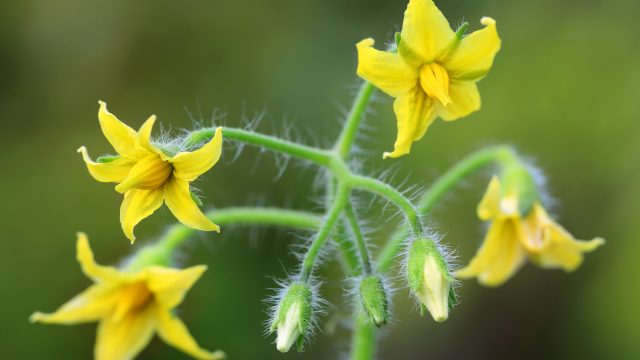
(Beyond Pesticides, April 16, 2026) A study of organic tomato agroecosystems with managed and wild bees, published in Apidologie, affirms the importance of protecting natural systems to support organisms that contribute to crop productivity. The study finds that the strategy of introducing social bees, even those native to other nearby areas, to enhance pollination in open-field conditions provides no direct benefits to the crops that are better served by wild bees. In evaluating the addition of Melipona quadrifasciata stingless bees, not native to the study site, for assisted pollination of tomato plants cultivated in open organic fields, the researchers note that “the presence of M. quadrifasciata hives did not influence fruit quality, indicating that wild bees primarily drove pollination benefits.”
This research, in assessing both wild and managed bees in organic tomato agroecosystems, supports previous scientific literature showing that promoting naturally occurring pollinators is the most sustainable and cost-effective strategy for ensuring pollination services. “This finding underscores the importance of conserving and promoting wild pollinator diversity in organic agroecosystems, as they play a critical role in sustaining pollination services,” the researchers affirm. They also say, “By offering a diverse range of floral shapes, colours, traits, and sizes, non-crop plants support a broader assemblage of pollinator species with complementary functional traits.” Incorporating non-crop plants helps to enhance biodiversity and support beneficial organisms.
As the managed hives did not directly contribute to tomato pollination, the wild bees provide the primary pollination service, highlighting the importance of supporting wild bees in all agroecosystems. The authors state: “DNA metabarcoding analysis confirmed that M. quadrifasciata did not visit tomato flowers and relied mostly on pollen from arboreal plants. Our findings underscore the importance of conserving and promoting wild pollinators in organic agroecosystems by managing non-crop plants, which support diverse pollinator communities.”
Study Importance and Background
As the study points out, “The demand for assisted pollination has increased, particularly for high-nutrition crops that form the basis of family farming (e.g., fruits and vegetables) and are highly dependent on animal pollination.” Using Meliponini hives for assisted pollination in Brazil is common, as they naturally occur in this region, lack a functional stinger and reduce risks of adverse incidents for farmers and farmworkers, and have generalist foraging habits. “Additionally, these bees exhibit morphological and behavioural diversity, including the ability to vibrate their bodies, which allows them to pollinate a wide variety of buzz-pollinated plants,” the researchers write.
Tomato plants require specific pollination behaviors, but are also “capable of self-pollination due to their hermaphroditic and self-compatible flowers.” Cross-pollination by bees, however, significantly enhances fruit productivity. Data on the effectiveness of adding managed stingless bees as a pollinator strategy in tomato agroecosystems, however, is scarce. “This practice typically lacks local, empirical validation, raising significant doubts about the efficacy of these bees on new target crops, their foraging preferences, and colony viability in new environments,” the authors write.
Methodology and Results
This study evaluates assisted pollination of tomato plants grown in open organic fields by assessing the quality of M. quadrifasciata hives, impact of introducing M. quadrifasciata hives on the diversity and abundance of wild bees, and the productivity and quality parameters of tomato fruits. These hives were maintained in an experimental area in Brazil, which is considered a biodiversity hotspot. “This biome supports 12% of the bee species in the Neotropical region, comprising approximately 820 species, with a significant proportion of endemic species,” the researchers state.
“The introduction of M. quadrifasciata hives into agroecosystems was evaluated across seven farms from July to October 2023,” with each of the farms engaging in organic management systems for at least three years prior to the study. The farmers also allowed non-crop plants to grow between crop rows and along field margins, providing additional areas for pollinators to visit.
Sampling of bees, tomatoes, and pollen collected from the hives allows for assessment of pollination services provided by wild and introduced bees. The authors state: “We evaluated the occurrence of introduced and wild bees in the tomato plants and on non-crop plants around the field margins, within a radius of up to 10 m from the cultivated area. Sampling bees on non-crop plants aimed to determine whether M. quadrifasciata also foraged on these plants, which are essential for maintaining wild bee interactions within tomato crop areas.” Up to two fruits per treatment from each tomato plant were also collected, which included “(1) SP—self-pollination, where tomato inflorescences were bagged during the pre-anthesis stage using material that allows only wind passage, preventing bee visits; and (2) OP—open-pollination, where bees were allowed to visit the flowers.” Fruit quality is assessed using measurements for fruit weight, diameter, number of seeds per fruit, and pest damage.
As a result, the researchers find that despite the introduced hives establishing new brood cells and food storage pots for pollen and honey, they did not visit any tomato flowers. In total, 2,692 bees visiting tomato (1,290 individuals) and non-crop (1,402) flowers were collected, which were identified into 60 different species. Of these, eight species were recorded only on tomato plants, 37 on non-crop plants, and 15 on both. The bees that most frequently visited the tomato plants were Paratrigona lineata, Exomalopsis analis, Exomalopsis auropilosa, and multiple species of Pseudaugochlora.
The study also reveals “no significant effect of managed colonies on the assessed fruit quality parameters” even though the tomatoes with open pollination have higher fruit weights and lengths, as well as higher numbers of seeds. The authors conclude that: “Hive introduction did not influence fruit quality, confirming that wild bees primarily drove the benefits of pollination, besides the role of wind. This suggests limited effectiveness of M. quadrifasciata for assisted pollination in open-field tomato crops.” This also further highlights the critical role of wild bee species and the urgent need to protect them.
Previous Research
Beyond Pesticides extensively covers the importance of pollinators and other beneficial organisms, as shown on the What the Science Shows on Biodiversity resource page. As shared in previous Daily News, bringing in managed pollinators to increase crop pollination, while critical in many orchard crops because of the kill-off of native bees, is undermined by chemical-intensive land management practices, particularly when the hives are on or near pesticide-contaminated “killing fields” or “ecological traps.” Pesticides are used on agricultural fields, and on seeds and crops grown in them; residues from spraying can drift to other areas, including vegetation on the perimeter of fields, and settle on soil and vegetation (including pollinator food sources), and contaminated water runoff can end up in drainage ditches and waterways that are favored by some flowering species. These chemicals are also used in nonagricultural areas for turf management, such as in public parks, greenspaces, golf courses, and other recreation or open spaces that may have pollinator-friendly vegetation (whether intentionally planted or “volunteer”). Direct exposures to pesticides, and/or indirect exposures through feeding from contaminated plants, exacerbate the negative impacts of these chemicals on pollinator populations. Opportunities for pollinator exposure to chemical pesticides can be rife.
Additional Daily News, entitled Bees Benefit from Diverse Flower Species in Ag Fields and Surroundings; Organic Farm Benefits Highest, highlights a large amount of evidence showing that organic farming presents effective solutions to many of these problems. Evidence shows that organic agriculture prevents the untold harms of pesticide-driven monoculture agriculture. In a study published in the Journal of Applied Ecology, German researchers compared 16 agricultural landscapes in Lower Saxony and northern Hesse that had different combinations of semi-natural habitat, organic practices, and annual and perennial flower strips. Overall, the researchers find that organic farming provides the highest benefit to the bees, along with the presence of diverse flowering plants in and near monoculture fields.
As the study shows, organic practices lead directly to lower parasite load and higher colony growth—essentially, the more organic crops, the more bees, and the more parasites, the fewer bees. Pesticides plus monoculture doubles the damage: Pesticides increase mortality, damage bees’ immune systems, and reduce foraging capacity, while monoculture disturbs bees’ nutritional balance, making them less able to resist parasites and survive pesticide exposure. In a perverse irony, conventional agriculture has been shifting toward more pollinated crops, such as almonds, apples, blueberries, cherries, and tomatoes. Beyond Pesticides has covered this research, which shows that between 1961 and 2016, the aggregate land area of crops requiring pollination grew by 136.9%, all while actual pollinator abundance was plunging because of pesticides, land use and climate changes, and monoculture. See additional Daily News about pollinators here.
Beyond Pesticide Resources
To help support the holistic, organic solution and protect all species—whether bees, other pollinators, or wildlife—we must shift away from the underlying agricultural and land management dependency on pesticides and incorporate practices that support biodiversity. Ultimately, the widespread adoption of organic management systems is necessary to protect biodiverse ecosystems and their inhabitants, especially those that support crop pollination.
Learn how to BEE Protective: Protecting Honey Bees and Wild Pollinators From Pesticides. In your own yard, use the Bee Protective Habitat Guide to plant a pollinator garden suited for your region, and consider seeding white clover into your lawn. Learn more about Pollinator-Friendly Seeds and Taking a Stand on Clover.
Consider taking action on governmental actions that are harmful to the environment and public and worker health, increase overall pesticide use, or undermine the advancement of organic, sustainable, and regenerative practices and policies. Sign up now to get our Action of the Week and Weekly News Updates delivered right to your inbox!
All unattributed positions and opinions in this piece are those of Beyond Pesticides.
Source:
Assunção, R. et al. (2026) Wild bees are key pollinators in organic tomato agroecosystems regardless of the presence of a managed stingless bee, Apidologie. Available at: https://link.springer.com/article/10.1007/s13592-026-01250-y.