



.png)
Gateway on Pesticide Hazards and Safe Pest Management
How To Find Ingredients in Pesticide Products
Beyond Pesticides offers resources below to evaluate the health and ecological effects of specific chemical exposure from ACTIVE INGREDIENTS in pesticide products, as well as regulatory information and supporting scientific documents. Because various pesticide products can contain more than one active ingredient, it is important to READ the LABEL to determine chemical components.
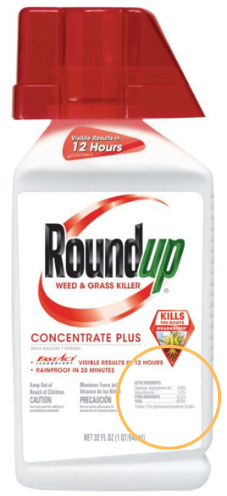
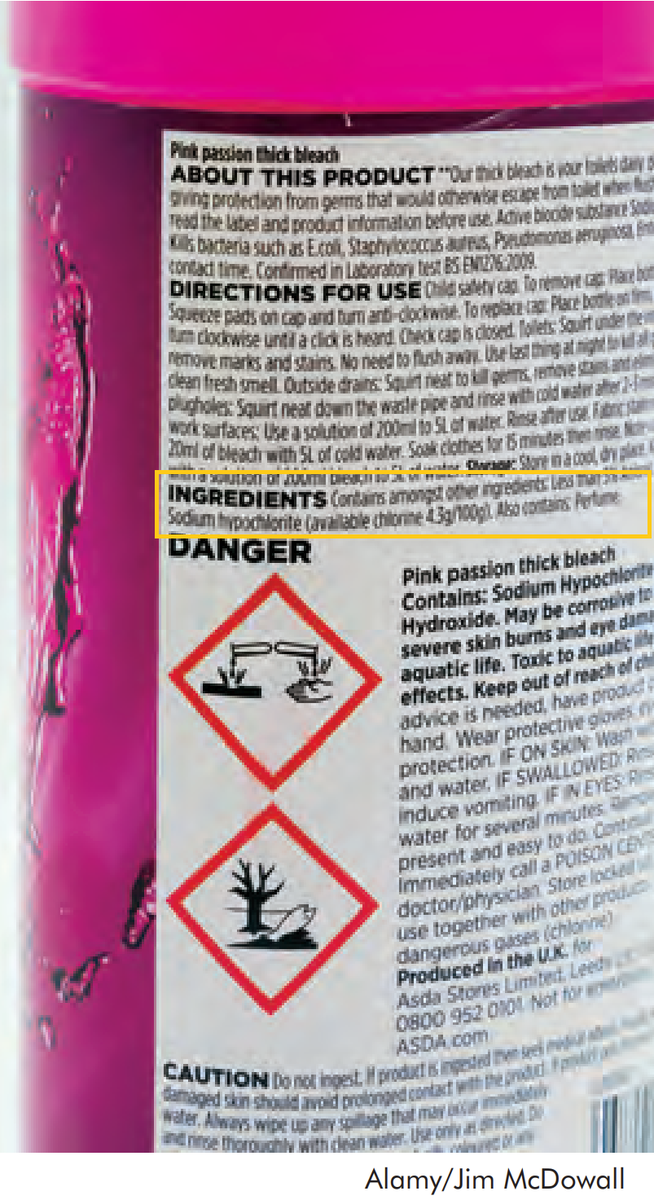

With 192 different active ingredients and counting, it is essential to establish the connection between the use of these chemicals and their respective hazards.
View the step-by-step guide on how to search for the active ingredient(s) in pesticide products below:
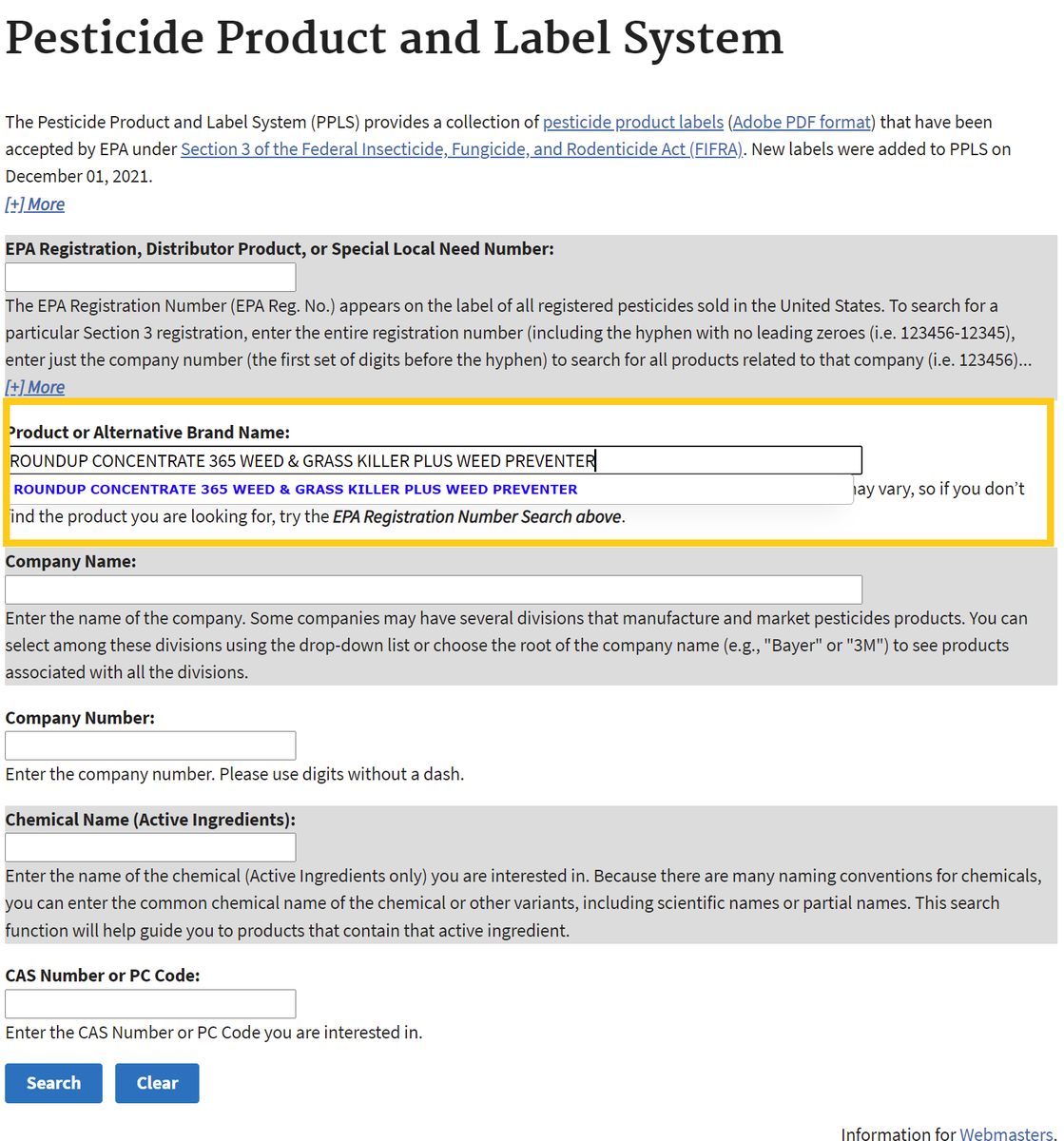
- Go to U.S. EPA's Pesticide Product and Label System and enter the product name. The generic product name may vary.
- After searching, click on the chemical ingredients tab or the link for the most recent label to find Active Ingredients.
Chemical List Label List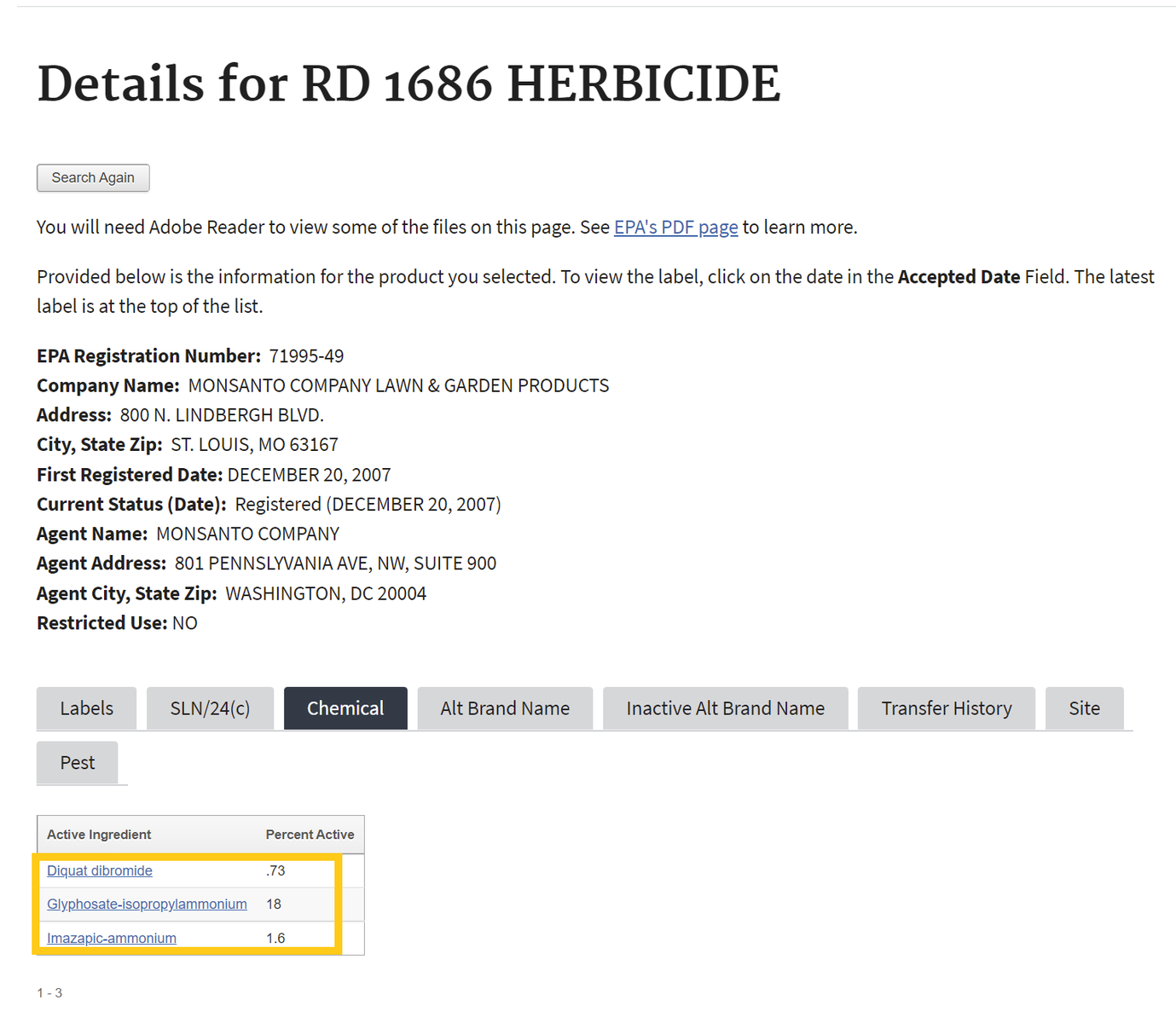
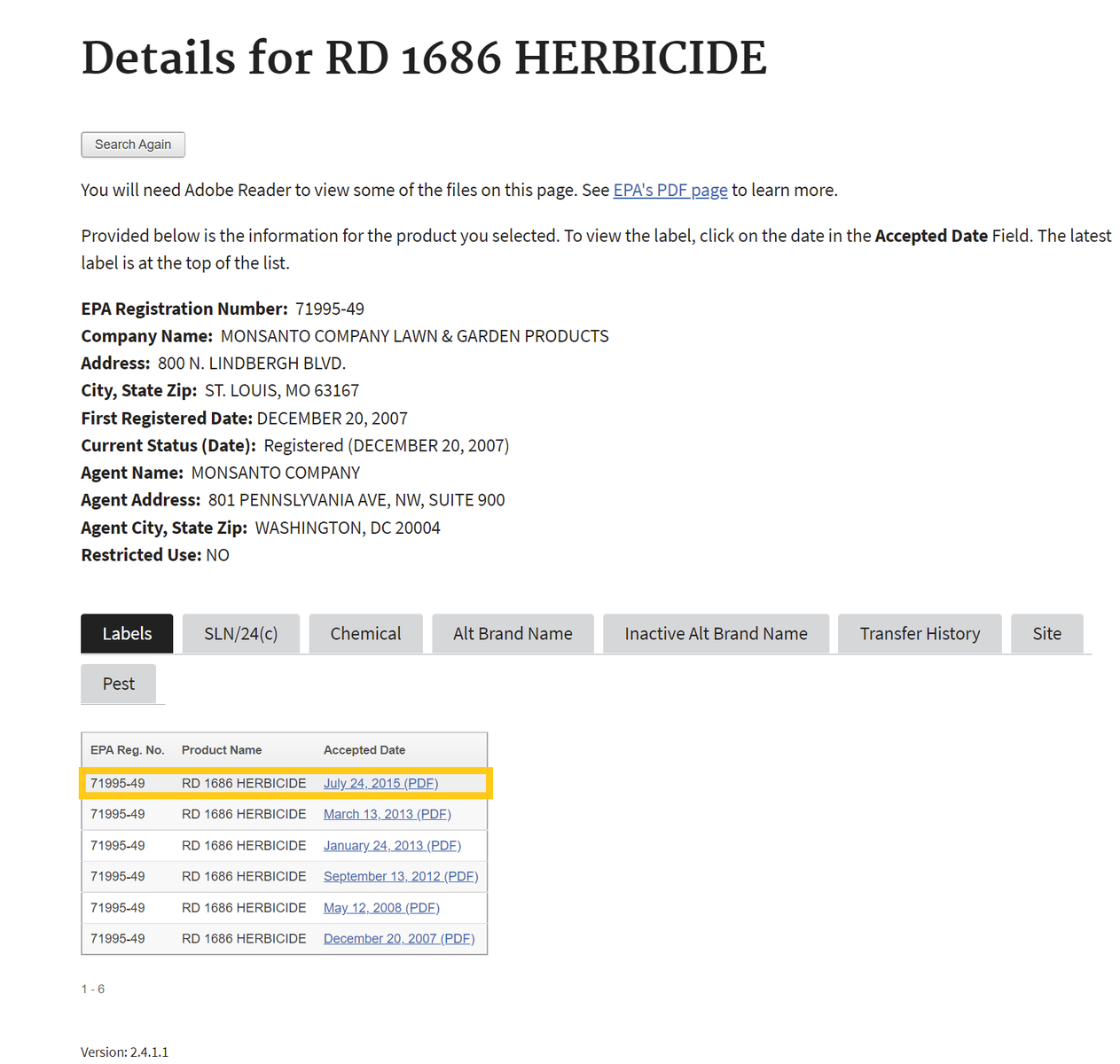
If one selects the chemical ingredients tab, skip to Step 4 . If not, proceed to step number 3 - To find the active ingredient(s) on the label, search for the page in the document containing the date of registration. Usually, the active ingredients section occurs within the first few pages of the label document.
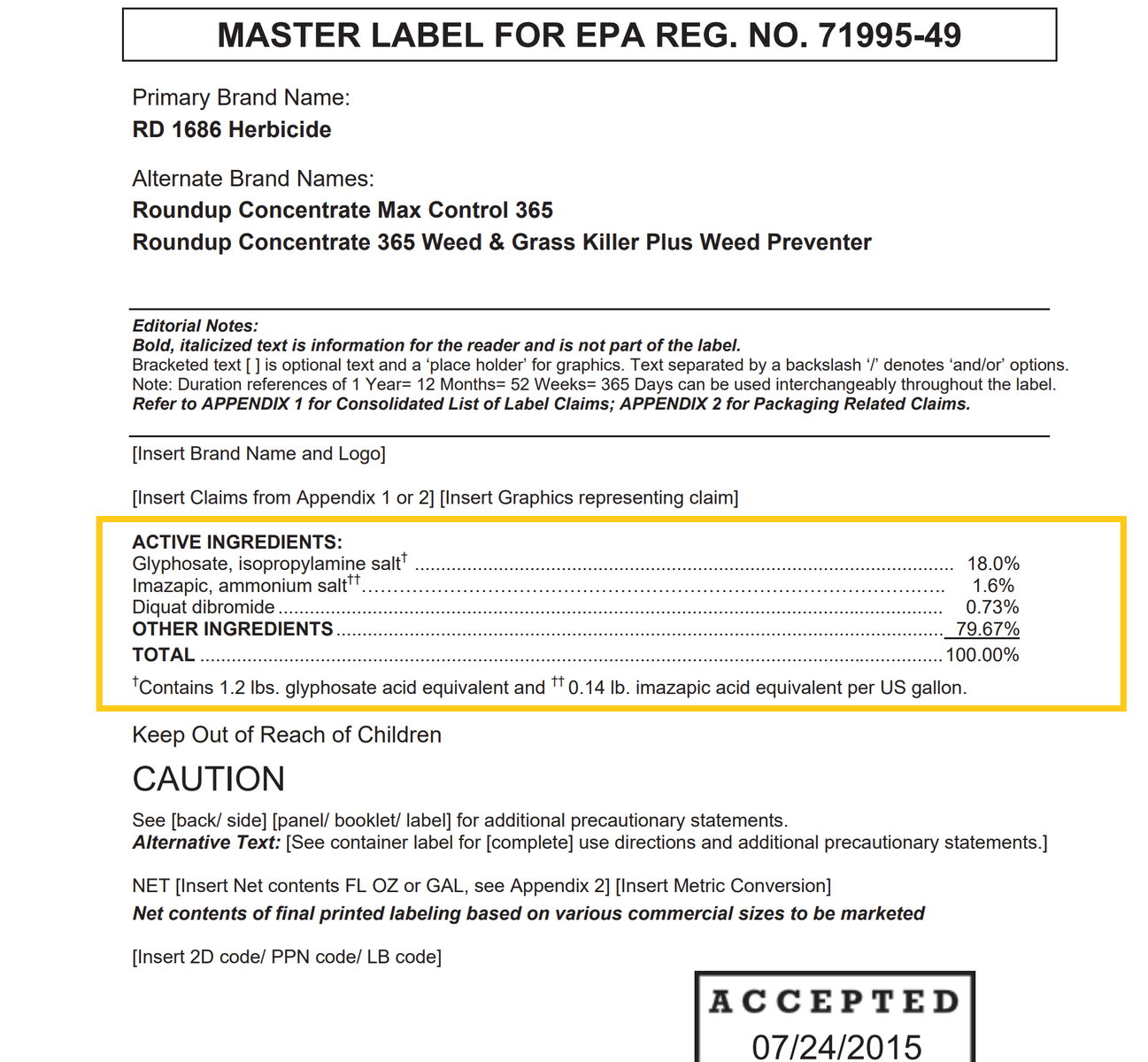
- Return to the Beyond Pesticides Gateway and search for the active ingredient name in the yellow box to the right or from the list below.
Chlorantraniliprole
General Information
- Product Names:
- Chemical Class: Anthranilic diamide insecticide
- Uses: Agriculture, turf, ornamental
- Alternatives: Organic agriculture, Organic lawn care
- Beyond Pesticides rating: Toxic
Health and Environmental Effects
- Cancer: Not Likely (1)
- Endocrine Disruption: Possible (2, 3)
- Reproductive Effects: Not Likely (4)
- Neurotoxicity: Not Likely (5, 4)
- Kidney/Liver Damage: Yes (6, 4, 7)
- Sensitizer/ Irritant: No (5, 4)
- Birth/Developmental: Not Likely (4)
- Detected in Groundwater: Yes (8, 9)
- Potential Leacher: Yes (10, 7)
- Toxic to Birds: Possible (7)
- Toxic to Fish/Aquatic Organisms: Yes (11, 7)
- Toxic to Bees: Yes (12, 13)
Residential Uses as Found in the ManageSafe™ Database
Additional Information
- Regulatory Status:
- Beyond Pesticides Testimony (03/2025)
- EPA Factsheet (04/2008)
- Supporting information:
- PAN Pesticides Database (Pesticide Action Network)
- IUPAC Pesticides Properties DataBase (International Union of Pure and Applied Chemistry)
- Studies [compiled from the Pesticide-Induced Diseases Database]
- Comparative ecotoxicity of chlorantraniliprole to non-target soil invertebrates. Lavtižar, V., Berggren, K., Trebše, P., Kraak, M.H., Verweij, R.A. and van Gestel, C.A., 2016. Chemosphere, 159, pp.473-479.
- Conclusion on the peer review of the pesticide risk assessment of the active substance glyphosate. European Food Safety Authority (EFSA), 2015. EFSA Journal, 13(11), p.4302.
- Immune response of Brazilian farmers exposed to multiple pesticides . Jacobsen-Pereira, C.H. et al. (2020) ‘Immune response of Brazilian farmers exposed to multiple pesticides’, Ecotoxicology and Environmental Safety, 202, p. 110912. doi:10.1016/j.ecoenv.2020.110912.
- Lethal and sublethal effects of seven insecticides on three beneficial insects in laboratory assays and field trials. Fernandes, M. et al. (2016) Lethal and sublethal effects of seven insecticides on three beneficial insects in laboratory assays and field trials, Chemosphere. Available at: https://www.sciencedirect.com/science/article/abs/pii/S0045653516306051.
- Intensive vegetable production under plastic mulch: A field study on soil plastic and pesticide residues and their effects on the soil microbiome. Beriot, N., Zornoza, R., Lwanga, E. H., Zomer, P., van Schothorst, B., Ozbolat, O., Lloret, E., Ortega, R., Miralles, I., Harkes, P., van Steenbrugge, J., & Geissen, V. (2023). Intensive vegetable production under plastic mulch: A field study on soil plastic and pesticide residues and their effects on the soil microbiome. The Science of the total environment, 900, 165179. https://doi.org/10.1016/j.scitotenv.2023.165179
- Comparing the Acute Toxicity of Imidacloprid with Alternative Systemic Insecticides in the Aquatic Insect Chironomus dilutus. Erin M. Maloney, Hunter Sykes, Christy Morrissey, Kerry M. Peru, John V. Headley, Karsten Liber, Comparing the Acute Toxicity of Imidacloprid with Alternative Systemic Insecticides in the Aquatic Insect Chironomus dilutus, Environmental Toxicology and Chemistry, Volume 39, Issue 3, 1 March 2020, Pages 587–594, https://doi.org/10.1002/etc.4639
- Pesticides detected in two urban areas have implications for local butterfly conservation. Dittemore, C. et al. (2025) Pesticides detected in two urban areas have implications for local butterfly conservation, Environmental Toxicology and Chemistry. Available at: https://academic.oup.com/etc/advance-article-abstract/doi/10.1093/etojnl/vgaf218/8245823.
Gateway Health and Environmental Effects Citations
1. US EPA Office of Pesticide Programs. List of Chemicals Evaluated for Carcinogenic Potential. October 30, 2023. http://npic.orst.edu/chemicals_evaluated.pdf
2. Ding, F., Liu, W., Diao, J.X., Yin, B., Zhang, L. and Sun, Y., 2011. Complexation of insecticide chlorantraniliprole with human serum albumin: Biophysical aspects. Journal of luminescence, 131(7), pp.1327-1335. https://doi.org/10.1016/j.jlumin.2011.03.007
3. Yuan, L., Lin, J., Peng, Y., Gao, R. and Sun, Q., 2020. Chlorantraniliprole induces adipogenesis in 3T3-L1 adipocytes via the AMPKα pathway but not the ER stress pathway. Food Chemistry, 311, p.125953. https://doi.org/10.1016/j.foodchem.2019.125953
4. USEPA, 2019. Chlorantraniliprole; Pesticide Tolerances. https://www.federalregister.gov/documents/2019/10/07/2019-21541/chlorantraniliprole-pesticide-tolerances.
5. US EPA, Office of Prevention, Pesticides and Toxic Substances, Reregistration Eligibility Decisions (REDs), Interim REDS (iREDs) and RED Factsheets. https://archive.epa.gov/pesticides/reregistration/web/html/status.html.
6. The Pesticide Management Education Program at Cornell University. Pesticide Active Ingredient Information. http://pmep.cce.cornell.edu/profiles/index.html.
7. International Union of Pure and Applied Chemistry. 2021. Chlorantraniliprole. http://sitem.herts.ac.uk/aeru/iupac/Reports/1138.htm
8. Pesticide Action Network Pesticide Database. http://www.pesticideinfo.org/Search_Chemicals.jsp.
9. Marsala, R.Z., Capri, E., Russo, E., Bisagni, M., Colla, R., Lucini, L., Gallo, A. and Suciu, N.A., 2020. First evaluation of pesticides occurrence in groundwater of Tidone Valley, an area with intensive viticulture. Science of The Total Environment, 736, p.139730. https://doi.org/10.1016/j.scitotenv.2020.139730
10. Pandey, N., Rana, D., Chandrakar, G., Gowda, G.B., Patil, N.B., Annamalai, M., Pokhare, S.S., Rath, P.C. and Adak, T., 2020. Role of climate change variables (standing water and rainfall) on dissipation of chlorantraniliprole from a simulated rice ecosystem. Ecotoxicology and Environmental Safety, 205, p.111324. https://doi.org/10.1016/j.ecoenv.2020.111324
11. U.S. EPA, Office of Prevention, Pesticides and Toxic Substances, New Active Ingredients Factsheets:
http://web.archive.org/web/20120107215849/http://www.epa.gov/opprd001/factsheets/index.htm
12. Christen, V., Kunz, P.Y. and Fent, K., 2018. Endocrine disruption and chronic effects of plant protection products in bees: Can we better protect our pollinators?. Environmental Pollution, 243, pp.1588-1601. https://doi.org/10.1016/j.envpol.2018.09.117
13. Smagghe, G., Deknopper, J., Meeus, I. and Mommaerts, V., 2013. Dietary chlorantraniliprole suppresses reproduction in worker bumblebees. Pest management science, 69(7), pp.787-791. https://doi.org/10.1002/ps.3504