


09
Jul
Habitat for Biodiversity In or Nearby Chemical-Intensive Agriculture Becomes a Deadly Trap, Study Finds
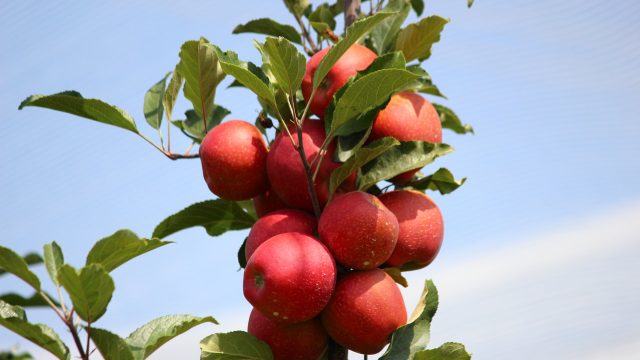
(Beyond Pesticides, July 9, 2026) In a study published in PLOS One, researchers identify “ecological cascades triggered by intensive, calendar-based pesticide applications,” resulting in “agricultural pesticide regimes [that] fundamentally restructure insect foraging networks through complex, poorly understood community-level pathways.” In comparing chemical-intensive apple orchards with adjacent pesticide-free cemeteries, this study documents the impacts on insect biodiversity with exposure to pesticides, noting that in areas without pesticide applications insect abundance and richness is higher and plant-pollinator networks are stronger.
When applying pesticides during peak insect activity, apple orchards create ecological traps and insect pollinator foraging network disruption with cascading effects through the ecosystem that extend beyond acute toxicity. As the authors explain: “The resulting exposure drives sublethal behavioural changes, forcing insects into narrower dietary niches and collapsing the complex web of plant-pollinator interactions. The final outcome is a functionally homogenized insect community, stripped of its diversity and resilience.” To sustain ecological integrity and insect biodiversity, as well as the subsequent ecosystem services they provide, such as pollination, pesticide-free habitats are essential. This study adds to the wide body of science that supports the urgent need for a widescale transition to organic agriculture and land management.
Study Importance and Background
Nontarget and beneficial species can be adversely affected by pesticides through direct or indirect routes, such as water contamination and runoff, pesticide residues, and by consuming food that has been sprayed. This exposure has led to insect extinction and ecological collapse, as documented by peer-reviewed scientific literature. (See What the Science Shows on Biodiversity for more information.)
Insect abundance and biomass are critical for ecosystem functioning but have been in decline due to intensive pesticide use and the resulting “insect apocalypse.” As Dave Goulson, PhD, says, this insect apocalypse that is occurring threatens all ecosystems. In an essay in Current Biology, he states, “Insects are integral to every terrestrial food web, being food for numerous birds, bats, reptiles, amphibians and fish, and performing vital roles such as pollination, pest control and nutrient recycling. Terrestrial and freshwater ecosystems will collapse without insects… we may have failed to appreciate the full scale and pace of environmental degradation caused by human activities in the Anthropocene.” (See Daily News Pesticide Contamination Moves Through the Food Web, From Aquatic Insects to Terrestrial Birds and Bats.)
As the current study authors note: “Global insect populations are facing an unprecedented crisis, with recent analyses indicating alarming rates of decline that threaten ecological stability and food security worldwide. This erosion of biodiversity is increasingly linked to agricultural intensification, particularly the widespread application of pesticides whose sublethal and cascading effects remain critically understudied.” This occurs frequently in fruit production, as systems such as apple orchards utilize calendar-based pesticide sprays while also relying on healthy pollinator communities to pollinate the crop. Through spray drift, non-crop flowering plants that these pollinators forage become ecological traps, habitats that attract organisms but then reduce their survival or fitness with exposure to toxic chemicals.
Methodology and Results
“This study employs a replicated, paired-comparison design in the apple-producing region of District Shopian, Kashmir Valley, India, one of South Asia’s most intensively managed fruit production landscapes to examine how pesticide-driven management restructures insect foraging communities across multiple ecological levels,” the researchers state. In evaluating apple-growing regions during one growing season from March to August 2025, they compare insect biodiversity in apple orchards and the surrounding land. The cemeteries adjacent to the apple orchards act as refuges, as they are “open, undisturbed areas with abundant vegetation… [with] no pesticide or herbicide applications [able to] maintain a diverse, unmanaged flora that provides a sanctuary for biodiversity.”
Pesticide application information was compiled from orchard owners and cross-referenced with local horticulture department extension records while floral resource assessments and insect foraging sampling was conducted by the researchers in the orchard and cemetery habitats. Data analyses were performed to assess differences in insect diversity, interaction networks, and temporal patterns between habitats. As a result, the pesticide-free cemetery areas show “a significantly higher floral abundance and species richness compared to orchards.”
According to the authors: “This resource disparity was reflected in the insect communities. Overall insect abundance was 68% lower in orchards, with species richness showing a parallel 55% reduction. This decline was not uniform across taxa; hoverflies (Syrphidae) and solitary bees (Apidae) were disproportionately affected, showing reductions of 78% and 72% in abundance, respectively, suggesting a heightened vulnerability to habitat perturbation.” The plant-pollinator networks also differed between the two habitats. The cemetery areas “exhibited a dense, interconnected web characteristic of a resilient and functionally diverse community,” while the orchard network “was sparse and linear, indicating a collapse of complex interactions.”
As the researchers summarize, “The structural collapse of the plant-pollinator network in the orchard evidenced by reduced connectance, nestedness, and increased specialization is a hallmark of an ecosystem under severe stress.” These findings highlight how areas without the use of chemical-intensive practices can support substantially richer pollinator communities, protecting insect biodiversity and ecological functioning.
Previous Research
As documented in Daily News entitled Continued Decline in Insect Species Biodiversity with Agricultural Pesticide Use Documented, science continues to mount on the threat to nontarget species and the biodiversity of insects that occur as a result of pesticide use. The authors of a literature review in Environments summarize the decline in insect species richness and abundance, linking the reliance on petrochemical pesticides and synthetic fertilizers to cascading negative impacts. Insects provide many important services, such as maintaining healthy soil, recycling nutrients, pollinating flowers and crops, and controlling pests. These nontarget and beneficial species are at risk through pesticide exposure, both directly and indirectly, which then affects these essential functions.
Danilo Russo, PhD—a speaker during the first session of our 42nd National Forum, The Pesticide Threat to Environmental Health: Advancing Holistic Solutions Aligned with Nature—continues to add to the existing literature on the threats to ecosystem services from environmental contaminants and climate change. Dr. Russo’s interests include habitat selection, resource partitioning, sensory ecology, social behavior, evolutionary biology, biogeography, and invasion ecology. Much of his research focuses on bats, but he also works on a range of other model organisms that perform ecosystem services, and has published over 200 scientific articles in internationally respected journals, including Nature Communications, Current Biology, Ecology Letters, and Biological Reviews.
In the book, Biological Control Systems and Climate Change, Dr. Russo’s chapter, entitled “Impact of Climate Change on Bats Involved in Biological Control,” explains one of the lost benefits of ecological balance attributable to the climate crisis. (See Climate Change Threat to Ecosystem Management of Insects Focus of New Book for more information.) In additional research on ecological traps, Dr. Russo, PhD documents the harm caused to wildlife from well-intentioned efforts to establish habitat on chemical-intensive farms or areas otherwise subject to chemical exposure. In this research, he writes: “[W]hen restoring habitats for bats in conventional farmland, potential unintended outcomes must be considered, particularly if restoration actions are not accompanied by mitigation of key threats. These threats include the persistent and widespread use of pesticides.” (See more coverage on Dr. Russo’s work here and here.)
An Organic Solution
While peer-reviewed, independent science captures the threats to health and the environment from exposure to petrochemical pesticides and synthetic fertilizers, research also documents the benefits of organic methods. The Daily News, Study Adds to Wide Body of Science Highlighting Benefits of Organic for Insect Biodiversity, critiques a study in Conservation Genetics, entitled “Organic farming fosters arthropod diversity of specific insect guilds—evidence from metabarcoding,” showcases the negative effect of chemical-intensive, conventional farm management on insect populations when compared to organically managed meadows. The researchers find that the diversity and biomass of flying insects are higher with organic land management by 11% and 75%, respectively.
With large numbers of insects at risk, the reliance on pesticides in agriculture and land management continues to threaten biodiversity, a key driver of ecosystem services. (See more on the importance of biodiversity here and here.) The evidence implicating pesticide use in the loss of insect biodiversity is both staggering and unsurprising. Insecticides kill insects, often indiscriminately and with devastating consequences for biodiversity, ecosystem stability, and critical ecosystem services. Herbicides and chemical fertilizers extinguish invaluable habitat and forage critical to insect survival. Taken together, insecticides, fungicides, herbicides and chemical fertilizers make large and growing swaths of land unlivable for vast numbers of insect species and the plants and animals they sustain.
As previously reported by Beyond Pesticides, studies upon studies upon studies show that pesticides are a major contributor to the loss of insect biomass and diversity, particularly in combination with climate change. Insects are important as pollinators and as part of the food web that supports all life, so the loss of insects is a threat to life on Earth. Promoting ecological balance and restoring biodiversity can be achieved through the elimination of petrochemical pesticides and synthetic fertilizers and with the adoption of organic practices. Studies show that organic farming has five times higher plant biodiversity and 20 times higher insect species richness compared to conventional farming and that higher biodiversity of insects is seen in fields with genetically diverse crops.
Take action to protect biodiversity and keep organic strong with a focus on the health of all organisms. Be part of the organic solution by becoming a member of Beyond Pesticides and stay informed with the Daily News Blog. Join the Parks for a Sustainable Future program as a Parks Advocate to transition your community to organic and make The Safer Choice to avoid hazardous home, garden, community, and food use pesticides.
All unattributed positions and opinions in this piece are those of Beyond Pesticides.
Source:
Riyaz, M. et al. (2026) Pesticide-induced ecological traps and insect pollinator foraging network disruption in apple orchards compared to adjacent graveyard refugia, PLOS One. Available at: https://journals.plos.org/plosone/article?id=10.1371/journal.pone.0350940.