


15
Jun
Action Calls on Congress to End Plastic Food Contact Packaging with Toxicants
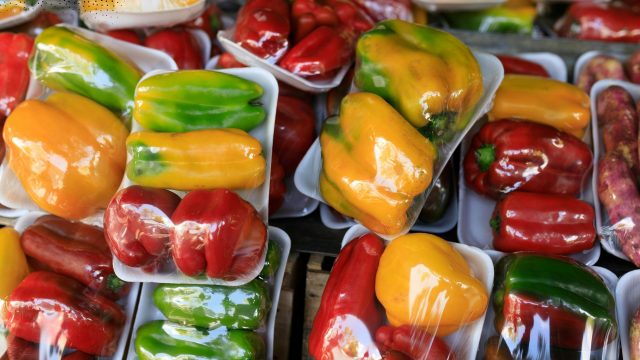
(Beyond Pesticides, June 15, 2026) An Action released by Beyond Pesticides is asking federal legislators to co-sponsor a bill that will prohibit certain toxicants in plastic food packing materials. The group is asking U.S. Senators and Representatives to cosponsor H.R.9231/S.4724, the No Toxics in Food Packaging Act.
Toxic substances moving from food packaging materials into packaged foods present a significant health risk. Packaging materials—including plastics, metals, glass, and paper—often contain additives, residual solvents, and the building blocks of molecules (monomers) that can contaminate food when they move into it.
Many of these substances, as well as their degradation products, can produce adverse effects ranging from endocrine disruption to cancer and reproductive toxicity and have been shown to move into food and be present at levels exceeding regulatory limits. The mechanisms by which chemicals transfer or migrate from plastic include diffusion, volatilization, permeation, convection, solvent extraction, and heat transfer. In addition to inadvertent migration, food packaging may also be purposely chosen to be “active”—which may absorb or release substances.
In March 2022, the United Nations Environment Assembly adopted UNEA Resolution 5/14 entitled “End plastic pollution: Towards an international legally binding instrument.” With the Trump Administration shutting down environmental programs and exiting from collaborative international environmental agreements, the work of the world community has taken on elevated importance, given the urgency of health, biodiversity, and environmental crises; so, too, has the work going on at the state level and in local communities across the U.S. The interconnectedness of the pesticide and plastic problems was brought into focus recently with a scientific review of articles showing elevated pesticide hazards linked to plastic contamination. A literature review in Agriculture, covering over 90 scientific […]
Food packaging materials affect organic products as well as those produced by chemical-intensive agriculture, so consumers who carefully read labels and choose products with organic ingredients may still find them contaminated by chemicals migrating from containers. Beyond Pesticides and others have alerted the National Organic Standards Board (NOSB) about the hazards of plastic in organic production and handling. Elimination of plastic packaging (which contains many of the chemicals listed in this bill) in organic production and handling should be a priority of the NOSB.
The No Toxics in Food Packaging Act, introduced by U.S. Representative Jan Schakowsky (IL-09), U.S. Senator Richard Blumenthal (D-CT), and U.S. Representative Rosa DeLauro (CT-03), takes a first step to eliminating toxic substances that are known to migrate from food packaging. It identifies 15 chemicals or chemical classes that are some of the most dangerous toxic chemicals migrating from food packaging and food processing materials—targeting chemicals that have been linked to cancer, reproductive harm, and other serious health risks. These chemicals—which include PFAS, orthophthalates, and bisphenols—would be “deemed to be unsafe for use as food contact substances.” Notably, the bill defines PFAS as a “perfluoroalkyl substance or a polyfluoroalkyl substance that contains at least 1 fully fluorinated methyl or methylene carbon atom,” the definition used internationally, though not currently by U.S. regulatory agencies, which are much more limited in their definition. The law will go into effect two years after enactment.
*Additional cosponsors of the No Toxics in Food Packaging Act include U.S. Representatives Nanette Barragán (CA-44), Jesús “Chuy” García (IL-04), Eleanor Holmes Norton (DC-At Large), Jonathan Jackson (IL-01), Stephen Lynch (MA-08), Chellie Pingree (ME-01), and Bonnie Watson Coleman (NJ-12), as well as U.S. Senators Tammy Duckworth (D-IL), Ed Markey (D-MA), Jeff Merkley (D-OR), and Ron Wyden (D-OR).
People are telling their U.S. Senators and Representative to cosponsor H.R.9231/S.4724, the No Toxics in Food Packaging Act.
In other plastics news, there are many uses of plastic—from artificial turf to plastic mulch to water pipes—that release toxic chemicals in use and micro- or nanoplastics as they degrade and should be eliminated. However, one broad class of plastic can be singled out because it is destined for immediate disposal—and disintegration into microplastics. Single-use plastics are therefore the target of statewide legislation that has been passed in Vermont and New Jersey. Beyond Plastics has drafted a model a model bill for statewide and local legislation to eliminate single-use plastics. This bill bans many of the most common sources of single-use plastic pollution—plastic bags, plastic straws, stirrers, splash guards, polystyrene, and balloon releases.
Letter to Congress
Toxic substances move, or migrate, from food packaging materials into packaged foods and present a significant health risk. Packaging materials—including plastics, metals, glass, and paper—often contain additives, residual solvents, and monomers that can contaminate food when they move into it.
Many of these substances, as well as their degradation products, can produce adverse effects ranging from endocrine disruption to cancer and reproductive toxicity and have been shown to move into food and be present at levels exceeding regulatory limits. Migration mechanisms include diffusion, volatilization, permeation, convection, solvent extraction, and heat transfer. In addition to inadvertent migration, food packaging may also be chosen to be “active”—which may purposely absorb or release substances.
Unfortunately, food packaging materials affect organic products as well as those produced by chemical-intensive agriculture, so consumers who carefully read labels and choose products with organic ingredients may still find them contaminated by chemicals migrating from containers.
The No Toxics in Food Packaging Act, introduced by U.S. Representative Jan Schakowsky (IL-09), U.S. Senator Richard Blumenthal (D-CT), and U.S. Representative Rosa DeLauro (CT-03), takes a first step in eliminating toxic substances that are known to migrate from food packaging. It identifies 15 chemicals or chemical classes that are some of the most dangerous toxic chemicals from food packaging and food processing materials—targeting chemicals that have been linked to cancer, reproductive harm, and other serious health risks. These chemicals—which include PFAS, orthophthalates, and bisphenols—would be “deemed to be unsafe for use as food contact substances.” Notably, the bill defines PFAS as a “perfluoroalkyl substance or a polyfluoroalkyl substance that contains at least 1 fully fluorinated methyl or methylene carbon atom,” the definition used internationally, though not currently by U.S. regulatory agencies, which are much more limited in their definition. The law will go into effect two years after enactment.
Please help eliminate dangerous chemicals in our food by cosponsoring the No Toxics in Food Packaging Act [H.R.9231/S.4724].
Thank you.