


13
Feb
Study Identifies Pesticide Residues in Soil as a Main Driver of Adverse Effects to Soil Biodiversity
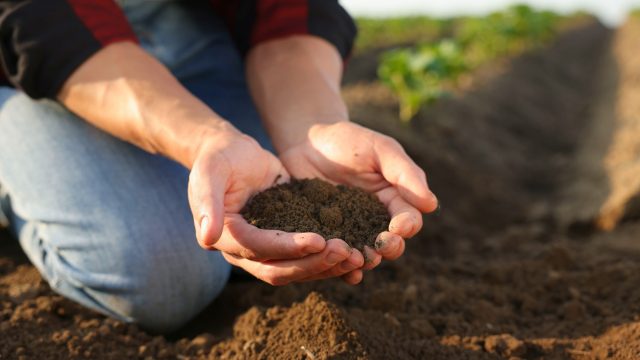
(Beyond Pesticides, February 13, 2026) In a novel, continent-wide study of soil biodiversity throughout Europe published in Nature, researchers find 70% of the sampled sites contain pesticide residues, which “emerged as the second strongest driver of soil biodiversity patterns after soil properties,” particularly in croplands. As soil biodiversity is key for ecosystem functioning, agricultural and land management practices that safeguard biodiversity are imperative. This study, however, highlights how pesticides alter microbial functions, including phosphorus and nitrogen cycling, and suppress beneficial taxa, such as arbuscular mycorrhizal fungi and bacterivore nematodes, and adds to a wide body of science that links pesticide residues in soil to adverse effects on biodiversity.
In analyzing 373 sites across woodlands, grasslands, and croplands in 26 European countries, and examining the effects of 63 pesticides on soil archaea, bacteria, fungi, protists, nematodes, arthropods, and key functional gene groups, the data reveals “organism- and function-specific patterns, emphasizing complex and widespread non-target effects on soil biodiversity.” As the authors state, “[T]o our knowledge, ours is the first study to demonstrate the relative importance of pesticides in comparison to soil properties, ecosystem type and climate at a continental scale.”
Study Importance
As Kristin Ohlson describes in her book The Soil Will Save Us, soil holds much more than meets the eye: “[W]hen we stand on the surface of the earth, we’re atop a vast underground kingdom of microorganisms without life as we know it wouldn’t exist. Trillions of microorganisms, even in my own smallish backyard, like a great dark sea swarming with tiny creatures—it almost makes me feel a little seasick standing there, knowing how much business is being conducted right under my feet.” These organisms living belowground play a vital role in ecosystem functions and services, including food production, carbon storage, erosion control, and water regulation.
As the current study states: “In addition to hosting nearly 59% of the Earth’s biodiversity, soils also act as sinks for contaminants, such as pesticides applied aboveground. These pesticides can persist in soils for extended periods, depending on their chemical properties and soil adsorption and absorption capacities.” While a multitude of previous studies (see examples below) find negative effects on soil organisms from pesticide exposure, “these studies have been spatially limited by focusing on specific countries and agroeco-systems, selected soil biota, and by including a very limited number of pesticide compounds,” the researchers say. “Therefore, the effects of multiple pesticides on complex soil communities at large geographical scales and across different ecosystem types have not been addressed, but are crucially needed to better assess biodiversity under pesticide pressure.”
Current risk assessments do not comprehensively access the effects of pesticides on soil microbiota, as they primarily focus the exposure of individual active ingredients to representative species, such as earthworms (Eisenia fetida), nematodes (Caenorhabditis elegans) and collembolans (Folsomia candida), “with specific endpoints such as mineralization and nitrogen transformation (for microbes, nitrate formation), and do not consider a wide range of field conditions and the effects of long-term exposure.” (See study here.) This limits the ability to assess broader ecological impacts of pesticide use on soil life, especially in mixtures with potential synergistic effects, on the wide range of soil organisms that can have species-specific effects.
Methodology and Results
The authors, while assessing 373 total sites across woodlands, grasslands, and croplands, focus primarily on cropland soils where pesticides are directly applied to understand the influence of pesticide active ingredients and their metabolites on soil biodiversity. “We hypothesized that pesticides influence soil biodiversity, more so in these intensively managed ecosystems,” they note. “To test this, we assessed the relationships between each pesticide concentration and:
(1) the richness and diversity (Shannon index) of each taxonomic group;
(2) their combined diversity (multidiversity);
(3) the relative abundance of functional groups; and
(4) the diversity of the functional gene groups.”
This takes into account other environmental drivers, including soil properties, climate, and ecosystem type, which then allows for the quantification of the relative importance of pesticide concentrations in shaping soil biodiversity in comparison.
All samples were collected during a single vegetation growing season from April to October in 2018, which occurred at “210 annual croplands (for example, maize and wheat), 34 permanent croplands (for example, vineyards, orchards and olive groves), 19 recently converted grasslands (that is, former croplands not cultivated for at least one year and not subjected to crop rotation, abandoned croplands and temporary grasslands), 97 extensive grasslands and 13 woodlands (including 6 coniferous and 7 broadleaved forests).” The study included sites other than those located in croplands to show how contamination can extend into surrounding ecosystems.
The results reveal:
- Throughout the five ecosystem types, a total number of 63 different pesticides are detected, with one or more pesticides at 70% of the sites.
- Of the 63 detected pesticides, 10 have been discontinued for use in the European Union at the time of sampling.
- 54% of the pesticides detected are fungicides, with 34.9% as herbicides and the remainder as insecticides (11.1%).
- “The highest numbers of residues and cumulative pesticide concentration were found in annual and permanent croplands, followed by grasslands and woodlands.”
- “The most sensitive gene groups affected by pesticides (fungicides, herbicides, and insecticides) in croplands were bacterial genes involved in the denitrification and chitin degradation.”
- The most commonly detected pesticides are the weedkiller glyphosate and its metabolite aminomethylphosphonic acid (AMPA), followed by the fungicide boscalid, herbicide pendimethalin, and fungicide epoxiconazole.
- “We found that the effects of pesticide concentrations in croplands (both annual and permanent crops) varied depending on organism taxonomical and functional group, and the pesticide involved.” For instance, fungi have multiple negative associations, with their richness particularly decreasing when exposed to four fungicides (boscalid, carbendazim, dimethomorph, and fluopyram) and the herbicide diflufenican.
- Bixafen concentrations cause a “decrease in fungal plant pathogens, a reduction in the richness of protists, nematodes and arthropods, as well as a reduction in the diversity of archaea, bacteria and arthropods.” Higher doses of carbendazim, fenpropidin, and epoxiconazole also reduce the relative abundance of arbuscular mycorrhizal fungi (AMF).
- Glyphosate causes declines in the “richness of protists and nematodes, the diversity of fungi and arthropods, and the abundance of archaeal nitrifiers and bacterivore nematodes.”
- AMF and bacterivore nematodes are negatively correlated with higher concentrations of the herbicide
- “As expected, the contribution of pesticides to explaining variation in soil biodiversity was consistently higher in croplands alone than when considering croplands together with other ecosystems. This pattern held across taxonomic groups, functional groups (up to 29.5% of variation explained in croplands and 17.4% across all ecosystems… These results confirm the central influence of pesticides on soil biodiversity in cropland systems and highlight the importance of including non-croplands to detect spillover effects and broader ecological patterns.”
The pesticide-driven changes documented in this study show a close link between taxonomic and functional diversity, as well as how soil biodiversity is influenced by pesticides in varied ways, “depending on the ecosystem, organism group, gene function, and type of pesticide, with both direct and indirect effects on many non-target groups and their roles in the soil.” As this study highlights, the relationship between pesticide residues and soil biodiversity is complex and organism-specific, with non-target effects that impact ecosystem functioning and stability.
Previous Research
Prior studies show that pesticides negatively affect the abundance and diversity of soil organisms, including soil invertebrates like earthworms, nematodes, and arbuscular mycorrhizal fungi. Controlled experiments (see here and here) find that pesticides can disrupt soil food web functioning by simultaneously affecting several non-target organisms.
Daily News published last year, titled “Soil Nematodes Vital to Plant Health Threatened by Nontarget Pesticide Exposure, Study Finds,” shares research in Advances in Modern Agriculture documenting pesticide residues threatening the health of soil nematodes and causing phytotoxic effects in cucumber plants. In assessing both the sprayed vegetables and the organisms within the soil, the authors find a negative correlation between pesticide exposure and soil nematode populations that is proportional to the application rates of the chemicals, as well as alterations in plant development. These impacts highlight potential wider effects on crop productivity, biodiversity, and human health.
Additional research in the journal Biology and Fertility of Soils confirms once again that soil health is harmed by conventional, chemical-intensive farming practices, but that organic agriculture can improve the impacted ecological functioning. The study shows that organic farming creates a healthy ecosystem able to support a balance of life forms in the soil, while the use of chemical fertilizers for agricultural management disrupts the stable biological relationship between protistan predators and their bacterial prey in soils, adding to the argument for transitioning away from conventional systems that lean on toxic inputs. (See Daily News here.)
Protecting the Soil Microbiome and Health of All
Soil health is essential not only for biodiversity and ecosystem function but for sustainable food production. A plethora of studies prove organic agriculture provides soil health benefits, has a significantly lower environmental impact than conventional food production, is more profitable and productive, provides human health benefits, and mitigates the crises of climate change and wildlife biodiversity. See the Pesticides and You article, Supporting Life in the Soil—The Foundation of an Organic System, for more information.
***
This Valentine’s Day—Taste the Difference: Organic Wine for a Meaningful Impact
This Valentine’s Day, as an alternative to flowers for your loved ones [please see our Action and don’t poison your valentine!], discover the wines from the Frey family—long valued sponsors of our National Forum series and a fourth-generation, family-owned and operated winery located at the pristine headwaters of the Russian River in Redwood Valley, Mendocino County, California.
Frey Vineyards has generously partnered with us and our network to offer a special discount on their incredible selection of wines—part of which is donated to Beyond Pesticides [25%]! ✨ We raise a glass to you, Frey Vineyards, for your commitment to an organic future and allyship in leading the transition to a world free of toxic pesticides! ↪️ Use promo code BEYOND20 at checkout to enjoy 20% OFF your Frey Wine purchase and FREE SHIPPING! https://www.freywine.com?couponCode=BEYOND20
Fan favorites from our staff include: the Organic Late Harvest Zinfandel (2022), “rich, jammy flavors of ripe blackberry and dark cherry, with notes of raisin, fig, and a hint of sweet spice, balanced by a velvety texture and a lingering, smooth finish,” the Organic Viognier (2018) with “succulent flavors of Asian pear and custard apple leading to a creamy mouthfeel,” and the Biodynamic Sauvignon Blanc (2022), with “notes of lemon custard, pineapple, and guava with deftly balanced acidity.”
Since 1980, America’s first Organic and Biodynamic Winery has been producing award-winning Organic and Biodynamic wines without added sulfites. In the U.S., only wine made with organic grapes and naturally occurring sulfites can be labeled organic.
Please remember to enjoy responsibly. For more information on the benefits of organic systems, click here: https://www.beyondpesticides.org/programs/organic-agriculture/overview
All unattributed positions and opinions in this piece are those of Beyond Pesticides.
Source:
Köninger, J. et al. (2026) Pesticide residues alter taxonomic and functional biodiversity in soils, Nature. Available at: https://www.nature.com/articles/s41586-025-09991-z.